Often Parched, India Struggles To Tap Monsoon
Update dated 10.2.06.
~~~~~~~~~~~~~~~~~~~~~~~~~~
India Digs Deeper/Wells Drying Up
By SOMINI SENGUPTA
Published: September 30, 2006
TEJA KA BAS, India — Bhanwar Lal Yadav, once a cultivator of cucumber and wheat, has all but given up growing food. No more suffering through drought and the scourge of antelope that would destroy what little would survive on his fields.
Skip to next paragraph
Thirsty Giant
Second of three articles.
Articles in this series examine India’s growing water crisis.
A previous article looked at urban water and sanitation problems.
Sunday: Floods and how to harvest ample rains.
Multimedia
Video
Part 1: Water Woes in India
Video
Part 2: Water Woes in India
Today he has reinvented himself as a vendor of what counts here as the most precious of commodities: the water under his land.
Each year he bores ever deeper. His well now reaches 130 feet down. Four times a day he starts up his electric pumps. The water that gurgles up, he sells to the local government — 13,000 gallons a day. What is left, he sells to thirsty neighbors. He reaps handsomely, and he plans to continue for as long as it lasts.
“However long it runs, it runs,” he said. “We know we will all be ultimately doomed.” Mr. Yadav’s words could well prove prophetic for his country. Efforts like his — multiplied by some 19 million wells nationwide — have helped India deplete its groundwater at an alarming pace over the last few decades.
The country is running through its groundwater so fast that scarcity could threaten whole regions like this one, drive people off the land and ultimately stunt the country’s ability to farm and feed its people.
With the population soaring past one billion and with a driving need to boost agricultural production, Indians are tapping their groundwater faster than nature can replenish it, so fast that they are hitting deposits formed at the time of the dinosaurs.
“What we will do?” wondered Pavan Agarwal, an assistant engineer with the state Public Health and Engineering Department, as he walked across a stretch of dusty fields near Mr. Yadav’s water farm. “We have to deliver water.”
He swept his arms across the field, dotted with government wells. This one, dug 10 years ago, had already gone dry. In that one, the water had sunk down to 130 feet. If it were not for the fact that electricity comes only five hours a day, every farmer in the area, Mr. Agarwal ventured, would be pumping round the clock.
Saving for a Dry Day
If groundwater can be thought of as a nation’s savings account for dry, desperate drought years, then India, which has more than its share of them, is rapidly exhausting its reserve. That situation is true in a growing number of states.
Indian surveyors have divided the country into 5,723 geographic blocks. More than 1,000 are considered either overexploited, meaning more water is drawn on average than is replenished by rain, or critical, meaning they are dangerously close to it. Twenty years ago, according to the Central Groundwater Board, only 250 blocks fell into those categories.
“We have come to the worst already,” was the verdict of A. Sekhar, who until recently was an adviser on water to the Planning Commission of India. At this rate, he projected, the number of areas at risk is most likely to double in the next dozen years. Across India, where most people still live off the land, the chief source of irrigation is groundwater, at least for those who can afford to pump it.
Here in Jaipur District, a normally parched area west of New Delhi known for its regal palaces, farmers depend on groundwater almost exclusively. Across Rajasthan State, where Jaipur is situated, up to 80 percent of the groundwater blocks are in danger of running out.
But even fertile, rain-drenched pockets of the country are not immune.
Consider, for instance, that in Punjab, India’s northern breadbasket state, 79 percent of groundwater blocks are classified as overexploited or critical; in neighboring Haryana, 59 percent; and in southern tropical Tamil Nadu, 46 percent. The crisis has been exacerbated by good intentions gone awry and poor planning by state governments, which are responsible for regulating water.
More at the link.
~~~~~~~~~~~~~~~~~~~~~~~~~~~~~~~~~~~~~~
Overpopulation, waste, mismanagement, and also climate change are all variables involved in the deepening water crisis in India. This proves that climate change is not just an environmental issue. Every area of our lives in affected by climate change which we now know is exacerbated by human activity.
India is also one of 27 countries identified by the United Nations Environment Program where the rising sea levels will submerge densely populated low-lying areas.
According to scientists, there will be a three-degree Celsius change in the global mean temperature by 2100 due to a doubling of carbon dioxide in the atmosphere that exacerbates water depletion. At India's rate of population growth and wasteful water usage combined with pollution that makes other sources of water unfit for human comsumption, it will never make it.
Climate Change Threatens India's Future
Britain To Talk To India On Climate Change
The above report then seems bizarre in relation to the dams proposed to be built along the Teesta River which also should be of grave concern to environmentalists and all who believe in human rights. Why build these expensive projects in such high numbers at the risk of displacing thousands of people and disrespecting their traditions and their way of life? That risks forever destroying the ecological balance of these pristine areas? That diverts the river water thus causing other areas to suffer as these areas of India are now suffering?
Could it be that governments see that the global water crisis is at a stage where control of the resources by corporate backed state governments is essential in maintaining control over the people? Perhaps if Coca Cola wasn't stealing their groundwater for its bottling plants as well, people would have water. How many more will we see in the coming years as the global water crisis increases, especially in the most underdeveloped but most populated areas of the world? Where is the EDUCATION on this topic as it relates to CONSERVATION, management, and irrigation techniques that will save water, along with a sustainable development plan regarding CO2 emissions?
Where there is also a higher demand with less access we are seeing and WILL see exploitation of people. As with the climate crisis, we face an emergency involving our global water resources and their management, and we are running out of time on both counts unless we also get this truth out to people and work to support a more sustainable world.
Saturday, September 30, 2006

Thursday, September 28, 2006
The Ilisu Dam Controversy
'We Will Lose A Real Treasure
TURKEY'S DAM CONTROVERSY
"We Will Lose a Real Treasure"
Designs for Turkey's Ilisu dam were finalized in 1982, but social, historical and environmental concerns have stalled development for decades. But this weekend saw the country's prime minister attend the groundbreaking ceremony for the dam, which is considered one of the world's most-controversial public works projects.
The ancient Turkish city of Hasankeyf is no stranger to conquest by distant powers. Nestled on the banks of the Tigris River, it still bears the mark of its successive rulers -- among them, Romans, Arabs, Mongols and Ottomans.
But now it's those reminders of a settlement that was established several thousand years before Christ's birth that Hasankeyf's 3,800 citizens fear will be lost. The ancient city lies at the heart of plans for a massive dam project that will provide water supplies and electricity to Turkey's southeast.
Photo Gallery: The Treasure Turkey Will Lose
Over the weekend, Turkish Prime Minister Recep Tayyip Erdogan's attended a groundbreaking ceremony for the project -- against the backdrop of 4,000 protestors who rallied against the Ilisu dam, which would forever submerge the town's archeological heritage.
"We will lose a real treasure," said Ercan Ayboga of the Initiative to Save Hasankeyf. Zeynep Ahunbay, a prominent activist for the preservation of historical sites in Turkey went even further, saying the ruins should be given UNESCO'S "world cultural heritage" designation.
Turkey says the €1.2 billion ($1.5 billion) Ilisu dam, one of 21 outlined under the broader $32 billion Greater Anatolia Project (GAP), will improve agricultural and social conditions by controlling flooding and improving irrigation.
Much more at the link.
~~~~~~~
The Ilisu Dam-Environmental Impacts
~~~~~~~~
And this is where Syria and Iraq come into the picture, as well as speculation regarding why this dam that will indeed do environmental damage and submerge a sacred city needs to be built. Especially when it will drive Kurds off their lands. Is this necessary, or simply political retribution?
The Middle East is already a water scarce region. Building billion dollar projects that seek to divert water from the Tigris River that Iraq and Syria also depend on can only cause friction down the line. And should the U.S. actually provide funds for this project that will divert water from Iraq, that would most certainly solidify the reason for being there... and it isn't to be benefactors to the Iraqi or Kurdish people.
Statement Of Hasankeyf Platform
Ilisu Dam: A Human Rights Disaster In The Making
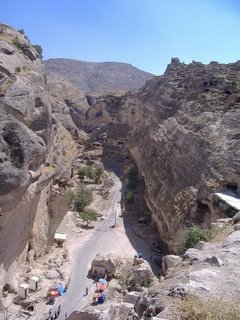
To me, disrespecting something others revere as sacred is abominable. What we are doing to our world in the name of "progress" is killing her. For once you exploit her soul there is nothing left. These government tactics to simply take over sources of water to then control their flow for profit without balance is a human rights abuse that will lead to widescale war in the future if we do not stand up against those who are aligned with it to exploit the poor at the profit of the rich.
TURKEY'S DAM CONTROVERSY
"We Will Lose a Real Treasure"
Designs for Turkey's Ilisu dam were finalized in 1982, but social, historical and environmental concerns have stalled development for decades. But this weekend saw the country's prime minister attend the groundbreaking ceremony for the dam, which is considered one of the world's most-controversial public works projects.
The ancient Turkish city of Hasankeyf is no stranger to conquest by distant powers. Nestled on the banks of the Tigris River, it still bears the mark of its successive rulers -- among them, Romans, Arabs, Mongols and Ottomans.
But now it's those reminders of a settlement that was established several thousand years before Christ's birth that Hasankeyf's 3,800 citizens fear will be lost. The ancient city lies at the heart of plans for a massive dam project that will provide water supplies and electricity to Turkey's southeast.
Photo Gallery: The Treasure Turkey Will Lose
Over the weekend, Turkish Prime Minister Recep Tayyip Erdogan's attended a groundbreaking ceremony for the project -- against the backdrop of 4,000 protestors who rallied against the Ilisu dam, which would forever submerge the town's archeological heritage.
"We will lose a real treasure," said Ercan Ayboga of the Initiative to Save Hasankeyf. Zeynep Ahunbay, a prominent activist for the preservation of historical sites in Turkey went even further, saying the ruins should be given UNESCO'S "world cultural heritage" designation.
Turkey says the €1.2 billion ($1.5 billion) Ilisu dam, one of 21 outlined under the broader $32 billion Greater Anatolia Project (GAP), will improve agricultural and social conditions by controlling flooding and improving irrigation.
Much more at the link.
~~~~~~~
The Ilisu Dam-Environmental Impacts
~~~~~~~~
And this is where Syria and Iraq come into the picture, as well as speculation regarding why this dam that will indeed do environmental damage and submerge a sacred city needs to be built. Especially when it will drive Kurds off their lands. Is this necessary, or simply political retribution?
The Middle East is already a water scarce region. Building billion dollar projects that seek to divert water from the Tigris River that Iraq and Syria also depend on can only cause friction down the line. And should the U.S. actually provide funds for this project that will divert water from Iraq, that would most certainly solidify the reason for being there... and it isn't to be benefactors to the Iraqi or Kurdish people.
Statement Of Hasankeyf Platform
Ilisu Dam: A Human Rights Disaster In The Making
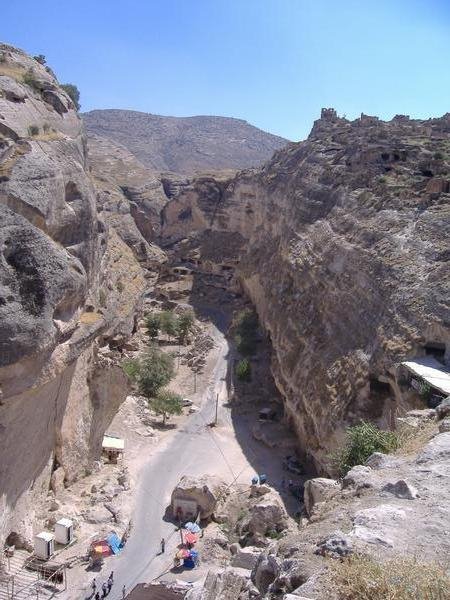
To me, disrespecting something others revere as sacred is abominable. What we are doing to our world in the name of "progress" is killing her. For once you exploit her soul there is nothing left. These government tactics to simply take over sources of water to then control their flow for profit without balance is a human rights abuse that will lead to widescale war in the future if we do not stand up against those who are aligned with it to exploit the poor at the profit of the rich.
Australia's Farms Thirst

Australia's Farms Thirst
USA: September 28, 2006
SYDNEY - Drought is again gripping Australia's farms, threatening to sap economic growth and complicate life for policy makers as they ponder whether to raise interest rates again.
Australia's farm sector is relatively small, accounting for a little less than 3 percent of Australia's annual A$918 billion ($690 billion) in economic output.
But agricultural output, including wheat, barley and sugar, still makes up 16 percent of exports and is prone to violent swings from year to year.
"A severe drought could wipe 0.8 percentage point off Australia's growth rate," estimated Craig James, chief equities economist at Commonwealth Bank.
"Rural exports would slump, farm incomes contract, and food, transport, retail and financial firms would experience sharply lower revenues," he said.
Such a drag would be significant given annual economic growth slowed to just 1.9 percent in the second quarter of this year, the slowest pace in three years. "During the last drought in 2002/03 we were coming from growth levels of 4 to 5 percent, but this time other sectors of the economy just aren't as strong," said Brian Redican, senior economist at Macquarie Bank.
That was an added uncertainty for the Reserve Bank of Australia (RBA) as it weighs the balance of risks between growth and inflation.
The central bank has judged inflation to be the danger so far, raising interest rates in August to a five-year high of 6.0 percent and warning that more may come.
"But drought could easily take a full percentage point out of growth and that has to be a factor for the RBA when deciding whether to raise rates again," said Macquarie's Redican.
THIS DRY LAND
Drought never seems far away here. Australians are the fourth biggest users of water among 30 industrialised nations, despite living on the driest inhabited continent on earth.
Eastern Australia has already experienced five consecutive years of below-normal rainfall, while last month was the driest August on record. Some 92 percent of New South Wales, the most populous state, is considered officially in drought.
Now, meteorologists are reporting strengthening signs of an El Nino event, a warming of temperatures in the central and eastern Pacific often associated with severe droughts in Australia.
More at the link.
~~~~~~~~~~~~~~~~~
Does this or does this not show a complete lack of leadership on the part of the Australian government to secure water resources for their people? FIVE CONSECUTIVE years of below normal rainfall that can be linked to climate change, and nothing. However, don't try to impart any truth to Howard... he's a Bush puppet. What good is their office on water going to do now after FIVE YEARS? Is it because there is an election next year that they feel they have to set up something to look as if they are doing something?
When we see a comprehensive plan to fight the climate crisis that also includes lowering fossil fuel emissions along with water conservation with the required amount of funds being given for a complete overhaul of their water infrastructure, then perhaps they will look serious. Australia needs water NOW, not when it is politicallly advantageous for them to formulate a real plan.
Tuesday, September 26, 2006
Australia Launches Water Office To Tackle Worsening Drought
Australians don't need another level of bureaucracy, they need WATER NOW. This is what happens when you POLITICIZE this issue. And if you are not going to tackle climate change in conjuction with this you are not tackling the water crisis, especially in regards to water infrastructure and waste as it relates to the effects of climate change...i.e. more severe and sustained droughts from the effects of climate change that will require proper management, infrastructure, and conservation. It is simply smoke and mirrors otherwise, just like this government's stance on the Kyoto Treaty.
~~~~~~~~~~~~~~
Australia Opens Water Office
Tue Sep 26, 1:32 AM ET
SYDNEY (AFP) - Australia's water resources are drying up much faster than predicted, experts have warned, as the government unveiled an office dedicated to tackling the worsening crisis.
Government scientists said their worst-case scenario for 2050 -- widespread drought, shrinking ski fields and crop failure -- appeared to be happening now and urgent action was needed to sustain water supplies.
"All the models we have been working on suggested the sort of drying we are seeing now wouldn't be here until about 2050, so it appears to be happening much quicker," eminent water scientist Peter Cullen told News Ltd. newspapers.
The dry weather could be caused by a dramatic acceleration of climate change or drought worsening the effects of expected levels of climate change, he said.
With the country in the grip of its third worst drought in history, the government announced Tuesday the creation of an office of water management to take charge of the situation.
"Water is the biggest environmental challenge Australia faces and the federal government is taking a growing role in directing and managing the response to the water challenge around Australia," said Parliamentary Secretary Malcolm Turnbull, the country's newly-anointed water guru.
The development follows the recent visit to Australia of former US vice president Al Gore, now a campaigner for climate change awareness, who said the effects of global warming were clearly visible in the world's driest inhabited continent.
However, Australian Prime Minister John Howard dismissed Gore's contention that climate change had led to a drop in rainfall in Australia's agricultural areas. He also did not meet Gore or see his film, "An Inconvenient Truth".
The so-called "Big Dry" has already cost the rural economy five billion dollars (3.85 billion US) and politicians took the unusual step of asking Australia's churches last month to pray for rain.
But conditions in the country's southeast and northeast coastal areas are expected to become even drier than normal over the next three months, according to the bureau of meteorology.
Government scientific agency CSIRO predicts Australia's average temperatures will rise up to two degrees Celsius (3.6 Fahrenheit) by 2030 and six degrees Celsius (10.8 Fahrenheit) by 2070.
Climate modelling also shows snow cover will shrink by almost 40 percent in the next 24 years and up to 85 percent by 2050.
Labor doesn't approve:
Labor Criticizes Water Plan
Throwing money at it now to give the illusion you are doing something doesn't solve it. Especially when it has been going on for so long.
Water Office To Tackle Drought Crisis
~~~~~~~~~~~~~~
Australia Opens Water Office
Tue Sep 26, 1:32 AM ET
SYDNEY (AFP) - Australia's water resources are drying up much faster than predicted, experts have warned, as the government unveiled an office dedicated to tackling the worsening crisis.
Government scientists said their worst-case scenario for 2050 -- widespread drought, shrinking ski fields and crop failure -- appeared to be happening now and urgent action was needed to sustain water supplies.
"All the models we have been working on suggested the sort of drying we are seeing now wouldn't be here until about 2050, so it appears to be happening much quicker," eminent water scientist Peter Cullen told News Ltd. newspapers.
The dry weather could be caused by a dramatic acceleration of climate change or drought worsening the effects of expected levels of climate change, he said.
With the country in the grip of its third worst drought in history, the government announced Tuesday the creation of an office of water management to take charge of the situation.
"Water is the biggest environmental challenge Australia faces and the federal government is taking a growing role in directing and managing the response to the water challenge around Australia," said Parliamentary Secretary Malcolm Turnbull, the country's newly-anointed water guru.
The development follows the recent visit to Australia of former US vice president Al Gore, now a campaigner for climate change awareness, who said the effects of global warming were clearly visible in the world's driest inhabited continent.
However, Australian Prime Minister John Howard dismissed Gore's contention that climate change had led to a drop in rainfall in Australia's agricultural areas. He also did not meet Gore or see his film, "An Inconvenient Truth".
The so-called "Big Dry" has already cost the rural economy five billion dollars (3.85 billion US) and politicians took the unusual step of asking Australia's churches last month to pray for rain.
But conditions in the country's southeast and northeast coastal areas are expected to become even drier than normal over the next three months, according to the bureau of meteorology.
Government scientific agency CSIRO predicts Australia's average temperatures will rise up to two degrees Celsius (3.6 Fahrenheit) by 2030 and six degrees Celsius (10.8 Fahrenheit) by 2070.
Climate modelling also shows snow cover will shrink by almost 40 percent in the next 24 years and up to 85 percent by 2050.
Labor doesn't approve:
Labor Criticizes Water Plan
Throwing money at it now to give the illusion you are doing something doesn't solve it. Especially when it has been going on for so long.
Water Office To Tackle Drought Crisis
Sunday, September 24, 2006
Water Intensive Crops

As water resources in many parts of the world become more in demand due to rising populations, mismanagement, waste, government intervention, privatization, and the effects of the climate crisis, countries are going to have to look for alternative methods to balance sustinence with demand.
My first thought in conserving water resources was regarding the most water intensive crops and what areas these crops were grown in. Rice is a very water intensive crop and is grown mostly in Asia which is experiencing severe water shortages due to mismanagement, waste, population, and now climate change.
Studies are being done on this:
~~~~~~~~~~~~~~~~~~~~~~~~~~~~~~~~
Thirsty Crops
Thirsty Crops initiative
Impact of water intensive crops on the water resources and other ecosystems: The water used for various crops is not only environmentally sustainable but also economically unviable. The impact that such water intensive crops "Thirsty Crops" have on the ecosystem are tremendous and the interlinked social impacts are also very high. To look into this issue for wise use of water for crops is what this initiative is all about.
Work on the impact of cultivation of crops such as rice, sugar cane and cotton on the available water resources in the Godavari basin initiated. A detailed field-based study of water use practices vis a vis the three water guzzling crops in the four states of Maharashtra, Madhya Pradesh, Andhra Pradesh and Orissa has been completed. Analysis and report preparation is underway. Future plans for selection of sugarcane as the thirsty crop and its impact and the alternative strategies that can be employed in the cultivation practices is the long term goal.
~~~~~~~~~~~~~~~~~~~~~~~~~~~~~~~~
These studies take into the account the variability of water needed vs. water wasted, and hope to strike a balance that will see water intensive crops grown in such a way where waste will not lead to such crops having to be cut or discontinued in areas for which such crops are the livelihood of those living in these areas.
Of course, the best scenario here would be to have areas grow higher value crops with less water. Unfortunately, that is not how it plays out.
Here is a listing of some water intensive crops:
Rice, cotton, alfalfa, apples, pecans, melons, corn(you want ethanol, it's gonna cost you), peppers, potatoes, watermelon, peanuts. How many of these foods besides many vegetables do you buy on a regular basis? Do you even know how much water it takes to grow them, or how much of that water is simply wasted in the irrigation process? Or even further, how much water is retained in the product that can be used over again?
I have thought about it, and have been looking into water saving methods regarding excess irrigation water, run off, timed sprinkler systems, catchement systems, and other methods to conserve water resources without having to sacrifice economically. Unfortunately again, droughts around the world are making it hard for some farmers to grow even the least water intensive crops which makes this most definitely a crucial issue we will have to face in this century with the world population estimated to be at 9 billion.
Another method is water transfers, but as this document indicates it doesn't always help the areas the water is being transferred from:
Farm Workers Water Transfer-California
Drought is already changing the way farmers here do business:
Drought Changing The Way Farmers do Business
So you see, how we live in these times will effect not only our water security but our food security and our environmental security. Water is not a topic to be taken lightly, for it is our lives. In my next entry I hope to showcase some methods of irrigation and conservation used in Asia.
Saturday, September 23, 2006
Mountain Water Resources Threatened
I suppose it would be sinful to suggest that ski resorts shorten their seasons.
Mountain Water Resources Threatened By Global Warming
Emmanuel Angleys
Fri Sep 22, 4:05 PM ET
MEGEVE, France (AFP) - Mountain water resources are under threat from global warming and increased usage of the precious resource by ski resorts, scientists warned at a conference in the French Alps.
"Mountains concentrate an important chunk of precipitation. All the great rivers of the world take their source from them. They are the planet's water castles," said Jean-Francois Donzier, director general of the International Office for Water.
TheUnited Nations forecast an increase in global temperatures of 1.4-5.8 degrees Celsius (34.5-42.4 degrees Fahrenheit), and implications for mountain water resources could be massive, the experts warned at the four-day conference in the French ski resort of Megeve.
The effects are already evident in the reduction in size of glaciers, with close to half of those in France forecast to disappear by the end of the century, according to Pierre Etchevers from the French weather office.
"We add eight to 10 meters (26 to 33 feet) of ladder every year to get to the Mer de Glace (glacier) in Chamonix," said Martial Saddier from the French Association of Mountain Water.
And a reduction in the volume of snow has been noted over the past 20 years, as well as a shortening of the period when snow falls, threatening the future of ski resorts below 1,800 metres and prompting the increased usage of snow cannons, machines turning water in snow which is then sprayed onto the pistes.
For ski resorts, the recourse to man-made snow has obvious economic advantages, attracting more and more visitors and extending the season -- despite complaints from purists.
Resorts now want to "guarantee that everyone who comes to the mountains has the possibility to ski from December to March/April," said Jean-Claude Domenego, head of the French Alpine Club.
But both the increase in the number of winter sports tourists and the greater recourse to snow machines have also added to pressure on mountain water resources, depleting resources and leaving less for other human uses such as agricultural irrigation downstream and hydro-electric power stations.
As a result around 20 artificial water reservoirs are being constructed in the Alps, said Alain Marnezy, professor at University of Savoie, including one for 400,000 cubic metres (14 million cubic feet) at Grand Bornand.
With mountains covering around a third of Europe's surface, there were also calls for greater support from European Union authorities.
The scientists also discussed the European directive aiming for a "good ecological state" of Europe's water by 2015, although there were differences over the definition of such a term.
"No one is in agreement on the definition of a good ecological state of water," said Jean-Marie Wauthier, international director at the water ministry in the Walloon region of Belgium.
There has to be a distinction between the biological state, characterised by a minimum presence of animal and plant life, and a good chemical state, meaning a lack of pollutants in the water, Wauthier said.
Further difficulties are created by the fact that many of Europe's rivers flow through more than one country, making cooperation between states imperative. The Danube, for example, flows through 18 countries.
~~~~~~~~~~~~~~~~~~~~~~~~~~~
Global Warming Threatens Snow
It's Happening In The U.S. As Well
Mountain Water Resources Threatened By Global Warming
Emmanuel Angleys
Fri Sep 22, 4:05 PM ET
MEGEVE, France (AFP) - Mountain water resources are under threat from global warming and increased usage of the precious resource by ski resorts, scientists warned at a conference in the French Alps.
"Mountains concentrate an important chunk of precipitation. All the great rivers of the world take their source from them. They are the planet's water castles," said Jean-Francois Donzier, director general of the International Office for Water.
TheUnited Nations forecast an increase in global temperatures of 1.4-5.8 degrees Celsius (34.5-42.4 degrees Fahrenheit), and implications for mountain water resources could be massive, the experts warned at the four-day conference in the French ski resort of Megeve.
The effects are already evident in the reduction in size of glaciers, with close to half of those in France forecast to disappear by the end of the century, according to Pierre Etchevers from the French weather office.
"We add eight to 10 meters (26 to 33 feet) of ladder every year to get to the Mer de Glace (glacier) in Chamonix," said Martial Saddier from the French Association of Mountain Water.
And a reduction in the volume of snow has been noted over the past 20 years, as well as a shortening of the period when snow falls, threatening the future of ski resorts below 1,800 metres and prompting the increased usage of snow cannons, machines turning water in snow which is then sprayed onto the pistes.
For ski resorts, the recourse to man-made snow has obvious economic advantages, attracting more and more visitors and extending the season -- despite complaints from purists.
Resorts now want to "guarantee that everyone who comes to the mountains has the possibility to ski from December to March/April," said Jean-Claude Domenego, head of the French Alpine Club.
But both the increase in the number of winter sports tourists and the greater recourse to snow machines have also added to pressure on mountain water resources, depleting resources and leaving less for other human uses such as agricultural irrigation downstream and hydro-electric power stations.
As a result around 20 artificial water reservoirs are being constructed in the Alps, said Alain Marnezy, professor at University of Savoie, including one for 400,000 cubic metres (14 million cubic feet) at Grand Bornand.
With mountains covering around a third of Europe's surface, there were also calls for greater support from European Union authorities.
The scientists also discussed the European directive aiming for a "good ecological state" of Europe's water by 2015, although there were differences over the definition of such a term.
"No one is in agreement on the definition of a good ecological state of water," said Jean-Marie Wauthier, international director at the water ministry in the Walloon region of Belgium.
There has to be a distinction between the biological state, characterised by a minimum presence of animal and plant life, and a good chemical state, meaning a lack of pollutants in the water, Wauthier said.
Further difficulties are created by the fact that many of Europe's rivers flow through more than one country, making cooperation between states imperative. The Danube, for example, flows through 18 countries.
~~~~~~~~~~~~~~~~~~~~~~~~~~~
Global Warming Threatens Snow
It's Happening In The U.S. As Well
Thursday, September 21, 2006
Thirsty Africa Digging Deep For Water
This illustrates perfectly what I was trying to explain in the entry before this one. How does having children do the work disguised as play to run a pump teach them about conservation, irrigation, management, and self sufficiency? This is an absolute CRISIS that is being faced in Sub-Saharan Africa because the lack of water is causing a famine that has put millions of people at risk of death, and already killed thousands including livestock. And while politicians go to initiatives to make feel good speeches and pledge money that doesn't even come close to solving anything, the crisis deepens. They don't need "pledges," they need ACTION NOW because they are running out of time.
~~~~
Thirsty Africa Digging Deep For Water
Friday September 22, 07:13 AM
Thirsty Africa 'digging deep for water'
New water sources are desperately needed in Africa where around 300 million people lack access to safe drinking water, the head of the World Water Council said.
Sub-Saharan Africa, with the exception of a few countries, is failing to meet UN targets set at the start of the millennium to halve the number of people without access to clean water or sanitation by 2015.
Of an estimated population of more than 700 million, about 313 million Africans lack access to basic sanitation with drought, war, pollution and fast urban growth hindering access.
"Africa represents about 24 per cent of land surface yet has only 9 per cent of water resources," said Loic Fauchon, head of the World Water Council, an international organisation that groups governments, firms and civil groups.
"That means we have to better the capacity we have to find other water sources maybe with new techniques. ... You have to help Africa draw water deeper just like it is done for petrol and gas," he said.
Speaking on the sidelines of an Africities summit in Nairobi where mayors and planners are meeting to seek solutions to the problems caused by swelling populations in African cities, Fauchon said the 2015 target was too lofty.
"(You need) a lot more time. ... What was forecast in terms of clean water and sanitation was too ambitious," he told Reuters.
"We do not even know at what pace we are going at."
He said Africa's obstacles to achieving the UN Millennium Development Goal (MDG) for water and sanitation were financial, institutional and the "know-how".
"The amounts dedicated to water and sanitation are ridiculously low," he said, adding that only 5 per cent of public aid and 6 per cent of investments were allocated to such projects.
~~~~
Thirsty Africa Digging Deep For Water
Friday September 22, 07:13 AM
Thirsty Africa 'digging deep for water'
New water sources are desperately needed in Africa where around 300 million people lack access to safe drinking water, the head of the World Water Council said.
Sub-Saharan Africa, with the exception of a few countries, is failing to meet UN targets set at the start of the millennium to halve the number of people without access to clean water or sanitation by 2015.
Of an estimated population of more than 700 million, about 313 million Africans lack access to basic sanitation with drought, war, pollution and fast urban growth hindering access.
"Africa represents about 24 per cent of land surface yet has only 9 per cent of water resources," said Loic Fauchon, head of the World Water Council, an international organisation that groups governments, firms and civil groups.
"That means we have to better the capacity we have to find other water sources maybe with new techniques. ... You have to help Africa draw water deeper just like it is done for petrol and gas," he said.
Speaking on the sidelines of an Africities summit in Nairobi where mayors and planners are meeting to seek solutions to the problems caused by swelling populations in African cities, Fauchon said the 2015 target was too lofty.
"(You need) a lot more time. ... What was forecast in terms of clean water and sanitation was too ambitious," he told Reuters.
"We do not even know at what pace we are going at."
He said Africa's obstacles to achieving the UN Millennium Development Goal (MDG) for water and sanitation were financial, institutional and the "know-how".
"The amounts dedicated to water and sanitation are ridiculously low," he said, adding that only 5 per cent of public aid and 6 per cent of investments were allocated to such projects.
Play Pumps
What Works
Well, this is an idea that at least gets water to people for now, which of course, is good. However, isn't it really an exploitation of children? Just because they live in poverty do they not warrant having the ability to walk into their homes and turn on a faucet for their water like American children do? You mean to tell me that these companies providing these "merry-go round pumps" don't have the capacity to then put more towards giving them quality water systems that can deliver water straight to their homes? In the 21st Century this isn't possible?
Laura Bush Announces Program At Clinton Initiative
And of course, because it is cheap and can get someone a high profile, Laura Bush announced a program regarding it at the Clinton Initiative this week. Unfortunately, it looks as though she didn't say that these children in Africa deserve to have the same access to water children in more priviledged countries have, especially countries like this that WASTE more than they use. How do these children also learn the tools necessary to provide for themselves? This type of activity just keeps them beholding to other entities such as the WORLD BANK.
I really do not mean to be negative here, but there are also other factors that I believe must be be considered. What happens in these Sub-Saharan areas when there isn't enough water to pump through these merry go rounds because of drought? How then do they get water? What happens should these children become ill and cannot play? How then do they get water?
While it is an idea that at least alleviates the drudgery of collecting water, it is still collecting water only by deceptive means. Grants should also be used for educational purposes to teach these children how to survive in their countries should pumps become unusable due to extreme drought, climate change, or other factors.
Although seeing their smiling faces is uplifting, the stain of poverty will remain on them pumps or not unless they are given a real chance to learn how to sustain themselves and again, they deserve to have water pumped right to their homes through faucets.
The fact that companies and politicians only use this to get props for themselves instead of really calling for what it takes to do this right, shows to me an underlying motive to it all. And yes, while I believe it is good it is said that they are getting safer water, perhaps one day the children of Africa will truly be looked upon as worthy of getting their water as American children do, and not needing to be exploited to get it.
Drought and Famine In Africa
Does Laura Bush and Bill Clinton also think the children dying of famine feel like then having to get on a "merry-go-round" to pump the water they need to live? This is just another "rich man's make himself feel good" project. Give the people the tools they need to become independent of the World Bank and other entities, then you are doing something. And Laura Bush, push your illegitimately elected torture loving husband to enact legislation that brings down the very human induced greenhouse gases that contribute to the droughts that are killing these people if you care so much, instead of doing these touchy feely speeches in your Armani suits and Gucci pumps.
Play Pumps
Why do they need ads and other messages on these pumps, and just what types of messages are being placed there?
It also appears that one of the sponsors is Coca-Cola...I wonder how much money they are making from having their products advertized on these pumps, and how much of it they might actually be taking to use to bottle for profit in exchange for their sponsorship. And both the Case Foundation and the MCJ Foundation are aligned with the Bush Administration and were part of their "interfaith" conference this year. Hmmm, do those using the water have to pledge their faith as well before being able to use it? I find it hard to believe that any corporation or government entity would sponsor anything like this without expecting anything in return, especially any organization tied to the Bush regime.
Again, it isn't the plan to bring clean water that I object to, it is the way it is being done, and what I see as a motivation to exploit it. These pumps could have been built to be powered on solar power or any type of hydraulics system rather than using the children to have to pump for it. To think any of that water they are pumping might be going to Coca Cola's or some other companies's profits from behind the scenes to me is just wrong.
Well, this is an idea that at least gets water to people for now, which of course, is good. However, isn't it really an exploitation of children? Just because they live in poverty do they not warrant having the ability to walk into their homes and turn on a faucet for their water like American children do? You mean to tell me that these companies providing these "merry-go round pumps" don't have the capacity to then put more towards giving them quality water systems that can deliver water straight to their homes? In the 21st Century this isn't possible?
Laura Bush Announces Program At Clinton Initiative
And of course, because it is cheap and can get someone a high profile, Laura Bush announced a program regarding it at the Clinton Initiative this week. Unfortunately, it looks as though she didn't say that these children in Africa deserve to have the same access to water children in more priviledged countries have, especially countries like this that WASTE more than they use. How do these children also learn the tools necessary to provide for themselves? This type of activity just keeps them beholding to other entities such as the WORLD BANK.
I really do not mean to be negative here, but there are also other factors that I believe must be be considered. What happens in these Sub-Saharan areas when there isn't enough water to pump through these merry go rounds because of drought? How then do they get water? What happens should these children become ill and cannot play? How then do they get water?
While it is an idea that at least alleviates the drudgery of collecting water, it is still collecting water only by deceptive means. Grants should also be used for educational purposes to teach these children how to survive in their countries should pumps become unusable due to extreme drought, climate change, or other factors.
Although seeing their smiling faces is uplifting, the stain of poverty will remain on them pumps or not unless they are given a real chance to learn how to sustain themselves and again, they deserve to have water pumped right to their homes through faucets.
The fact that companies and politicians only use this to get props for themselves instead of really calling for what it takes to do this right, shows to me an underlying motive to it all. And yes, while I believe it is good it is said that they are getting safer water, perhaps one day the children of Africa will truly be looked upon as worthy of getting their water as American children do, and not needing to be exploited to get it.
Drought and Famine In Africa
Does Laura Bush and Bill Clinton also think the children dying of famine feel like then having to get on a "merry-go-round" to pump the water they need to live? This is just another "rich man's make himself feel good" project. Give the people the tools they need to become independent of the World Bank and other entities, then you are doing something. And Laura Bush, push your illegitimately elected torture loving husband to enact legislation that brings down the very human induced greenhouse gases that contribute to the droughts that are killing these people if you care so much, instead of doing these touchy feely speeches in your Armani suits and Gucci pumps.
Play Pumps
Why do they need ads and other messages on these pumps, and just what types of messages are being placed there?
It also appears that one of the sponsors is Coca-Cola...I wonder how much money they are making from having their products advertized on these pumps, and how much of it they might actually be taking to use to bottle for profit in exchange for their sponsorship. And both the Case Foundation and the MCJ Foundation are aligned with the Bush Administration and were part of their "interfaith" conference this year. Hmmm, do those using the water have to pledge their faith as well before being able to use it? I find it hard to believe that any corporation or government entity would sponsor anything like this without expecting anything in return, especially any organization tied to the Bush regime.
Again, it isn't the plan to bring clean water that I object to, it is the way it is being done, and what I see as a motivation to exploit it. These pumps could have been built to be powered on solar power or any type of hydraulics system rather than using the children to have to pump for it. To think any of that water they are pumping might be going to Coca Cola's or some other companies's profits from behind the scenes to me is just wrong.
Monday, September 18, 2006
Australia Must Invest In Water Infrastructure
This is a common problem that is faced by more countries than the continent of Australia, but Australia is a clear example of how the effects of climate change combined with wasteful water practices will leave many countries literally high and dry if they do not get serious about investing in water infrastructure and managing waste of water.
And according to this report from 2003:
Human Induced Climate Change Causing Drought
Yet, PM Howard will not be willing to take the necessary steps regarding this crisis, because he parrots Bush's lame excuse that signing the Kyoto Protocol will hurt the economy. Apparently he hasn't been paying attention to world events, where the drought in China has cost them dearly in lost crops (as it has also right here in the U.S.A.) because of human induced drought. There does NOT have to be a sacrifice of economy for sustainability. WAR is what costs us PM Howard, not actually using our resources for SUSTINENCE.
And this:
Drought Kills Eight Million Cattle
The pictures here will break your heart. Cattle, shrimp, wheat, and other crops have been effected by this drought that has been going on for three years now, and is only predicted to get worse for the winter months. Just what has to happen before the leaders of Australia realize that the economy of this contneint IS suffering BECAUSE they need to have a plan to mitigate the effects of drought and other effects of human induced climate change and waste?
Worsening Drought In Australia
Earth Observatory
~~~~~~~~~~~~~~~~~~~~~~~~
Australia Told To Reform Water Systems
By Rob Taylor
Mon Sep 18, 4:24 AM ET
CANBERRA (Reuters) - Australia is the driest continent, but chronic water problems in its cities and rural areas are the result of poor management rather than water scarcity, a new report said Monday.
As Australia braces for another searing summer and a worsening drought, a report for a business lobby group said rather than restrict water use, governments should fix water supply flaws, which would boost the economy by as much as A$9 billion.
"Australia's water supply system is broken and needs urgent solutions," Business Council of Australia chief executive Katie Lahey said. "Unavoidable water scarcity is one of Australia's greatest myths."
Since 2002, Australians have endured one of the worst droughts in recorded history, with governments imposing restrictions on householders watering their gardens and banning people from using hoses to wash their cars.
The long dry spell has given rise to multi-billion dollar proposals to "turn the rivers around" and pipe water thousands of kilometers from the wet tropical north to the drought-affected southeast where most of Australia's 20 million people live.
The country's weather bureau is now predicting a drier and hotter than average spring from September to November, with a possible drought-inducing El Nino in its early stages.
Lahey said water restrictions in many communities would be unnecessary if a competitive water-trading scheme was introduced and there was more investment in water infrastructure.
"Water use in our major cities has declined by nine percent since 2001, but our water supply problems are getting worse," she said.
Visiting Australia last week, former U.S. Vice-President Al Gore warned Australia had more to fear from global warming than almost any other nation given the scarcity of water.
The Business Council said to help address problems, the price of water needed to rise, with Australians willing to pay 540 times more for bottled drinking water than they were for water through the tap.
Water expert Peter Cullen from the University of Canberra said the BCA paper was a wake-up call for governments at all levels across Australia.
"Water trading is necessary and we must all expect to pay more for water," he said, adding Australia had been caught out by the pace at which climate change had hit water resources.
"Much of what is happening now we were not expecting to see until 2050," he said.
But Mike Young, an environmental scientist at the University of Adelaide, said despite its sun-parched image, Australia ranked 40th in the world for availability of water per head of population, with more 150 nations worse off.
And according to this report from 2003:
Human Induced Climate Change Causing Drought
Yet, PM Howard will not be willing to take the necessary steps regarding this crisis, because he parrots Bush's lame excuse that signing the Kyoto Protocol will hurt the economy. Apparently he hasn't been paying attention to world events, where the drought in China has cost them dearly in lost crops (as it has also right here in the U.S.A.) because of human induced drought. There does NOT have to be a sacrifice of economy for sustainability. WAR is what costs us PM Howard, not actually using our resources for SUSTINENCE.
And this:
Drought Kills Eight Million Cattle
The pictures here will break your heart. Cattle, shrimp, wheat, and other crops have been effected by this drought that has been going on for three years now, and is only predicted to get worse for the winter months. Just what has to happen before the leaders of Australia realize that the economy of this contneint IS suffering BECAUSE they need to have a plan to mitigate the effects of drought and other effects of human induced climate change and waste?
Worsening Drought In Australia
Earth Observatory
~~~~~~~~~~~~~~~~~~~~~~~~
Australia Told To Reform Water Systems
By Rob Taylor
Mon Sep 18, 4:24 AM ET
CANBERRA (Reuters) - Australia is the driest continent, but chronic water problems in its cities and rural areas are the result of poor management rather than water scarcity, a new report said Monday.
As Australia braces for another searing summer and a worsening drought, a report for a business lobby group said rather than restrict water use, governments should fix water supply flaws, which would boost the economy by as much as A$9 billion.
"Australia's water supply system is broken and needs urgent solutions," Business Council of Australia chief executive Katie Lahey said. "Unavoidable water scarcity is one of Australia's greatest myths."
Since 2002, Australians have endured one of the worst droughts in recorded history, with governments imposing restrictions on householders watering their gardens and banning people from using hoses to wash their cars.
The long dry spell has given rise to multi-billion dollar proposals to "turn the rivers around" and pipe water thousands of kilometers from the wet tropical north to the drought-affected southeast where most of Australia's 20 million people live.
The country's weather bureau is now predicting a drier and hotter than average spring from September to November, with a possible drought-inducing El Nino in its early stages.
Lahey said water restrictions in many communities would be unnecessary if a competitive water-trading scheme was introduced and there was more investment in water infrastructure.
"Water use in our major cities has declined by nine percent since 2001, but our water supply problems are getting worse," she said.
Visiting Australia last week, former U.S. Vice-President Al Gore warned Australia had more to fear from global warming than almost any other nation given the scarcity of water.
The Business Council said to help address problems, the price of water needed to rise, with Australians willing to pay 540 times more for bottled drinking water than they were for water through the tap.
Water expert Peter Cullen from the University of Canberra said the BCA paper was a wake-up call for governments at all levels across Australia.
"Water trading is necessary and we must all expect to pay more for water," he said, adding Australia had been caught out by the pace at which climate change had hit water resources.
"Much of what is happening now we were not expecting to see until 2050," he said.
But Mike Young, an environmental scientist at the University of Adelaide, said despite its sun-parched image, Australia ranked 40th in the world for availability of water per head of population, with more 150 nations worse off.
Saturday, September 16, 2006
China Planning To STEAL Tibet's Water
China's Designs On Tibet
Excerpt:
Once in place, the infrastructure network will speed up the exploitation of the Tibetan plateau's rich deposits of gold, copper, zinc, coal and other resources. Copper is regarded as particularly valuable as it is an essential component in the generation and transmission of electricity.
China has also invited transnational oil giants such as BP and Shell to explore for oil and gas equivalents after realising that its own companies lacked the expertise known to drill in a region known for its complex geology.
The Free Tibet Campaign, which fights for China's complete withdrawal from Tibet, has mounted a vigorous opposition against Western oil and mining companies helping China to extract local resources because it says Tibetans are routinely denied participation in key decision-making surrounding such projects.
"Tibetans are unable to exercise their economic rights to determine how their resources are utilised," Whitticase said. "They live in an atmosphere of fear and intimidation where opposition to an unsuitable project such as hydrocarbon extraction would have dire consequences.''
Perhaps one of the most controversial Chinese plans to tap Tibetan resources to date is Beijing's new water scheme, called the "the big Western line".
Encouraged by the success of its civil engineering triumph with the Golmud-Lhasa railway, Chinese planners have come up with an even more audacious scheme to build a series of aqueducts, tunnels and reservoirs that would carry water from Tibet all the way to the parched plains of Northern China.
The partly underground 300 km western line could eventually supply up to eight billion cubic metres of water a year from the Jinsha and other rivers in the Tibetan region, according to Li Guoying, head of the Yellow River Conservancy Commission. The water will also be used to feed the Yellow River's upper reaches to feed rising industrial demand, Li told the media at a press briefing recently.
Still, the project remains so controversial that no starting date has been announced. (END/2006)
~~~~~~~~~~~~~~~~~~~~~~~~~~~~~~~~~~
Reading this has truly incensed me, because it lays bare the motivations of the Chinese government for the world to see. HOW we can do so much business with this country knowing what their government is boggles my mind. Their leaders are corrupt, they deplore freedom of speech, and they do not care for the people, the environment, nor the spiritual ties this land has to those who live there.
Imagine the damage to the environment their 21 highway project will cause. Imagine the damage to the land with all the aqueducts and other means of stealing Tibet's water they will come up with to not have to be RESPONSIBLE for what they are doing in their own country. It is no wonder no date has been set for their latest scheme. It should bring international condemnation to them for their blatant attempt to ravage Tibet and other holy places of their resources particularly their water, and take the identity of their people away just for their own profit.
See:
Free Tibet Campaign
The Chinese Water Grab
About Tibet
Project For Tibet
Friends Of Tibet
I think it is interesting to note that in this region which includes the Himalayans, one of the rivers that are part of this system is the Indus which I also reported about here in an entry regarding dams being built in the same regions where indigenous people would be effected.
You can also read about that here:
Destroying A Himalayan Paradise
HOW MUCH MORE OF OUR BEAUTIFUL WORLD WILL WE ALLOW THEM TO TAKE TO ASSUAGE THEIR GREED? China only wants this region as a military installation. I say, the ravaging of Tibet must be stopped.
Excerpt:
Once in place, the infrastructure network will speed up the exploitation of the Tibetan plateau's rich deposits of gold, copper, zinc, coal and other resources. Copper is regarded as particularly valuable as it is an essential component in the generation and transmission of electricity.
China has also invited transnational oil giants such as BP and Shell to explore for oil and gas equivalents after realising that its own companies lacked the expertise known to drill in a region known for its complex geology.
The Free Tibet Campaign, which fights for China's complete withdrawal from Tibet, has mounted a vigorous opposition against Western oil and mining companies helping China to extract local resources because it says Tibetans are routinely denied participation in key decision-making surrounding such projects.
"Tibetans are unable to exercise their economic rights to determine how their resources are utilised," Whitticase said. "They live in an atmosphere of fear and intimidation where opposition to an unsuitable project such as hydrocarbon extraction would have dire consequences.''
Perhaps one of the most controversial Chinese plans to tap Tibetan resources to date is Beijing's new water scheme, called the "the big Western line".
Encouraged by the success of its civil engineering triumph with the Golmud-Lhasa railway, Chinese planners have come up with an even more audacious scheme to build a series of aqueducts, tunnels and reservoirs that would carry water from Tibet all the way to the parched plains of Northern China.
The partly underground 300 km western line could eventually supply up to eight billion cubic metres of water a year from the Jinsha and other rivers in the Tibetan region, according to Li Guoying, head of the Yellow River Conservancy Commission. The water will also be used to feed the Yellow River's upper reaches to feed rising industrial demand, Li told the media at a press briefing recently.
Still, the project remains so controversial that no starting date has been announced. (END/2006)
~~~~~~~~~~~~~~~~~~~~~~~~~~~~~~~~~~
Reading this has truly incensed me, because it lays bare the motivations of the Chinese government for the world to see. HOW we can do so much business with this country knowing what their government is boggles my mind. Their leaders are corrupt, they deplore freedom of speech, and they do not care for the people, the environment, nor the spiritual ties this land has to those who live there.
Imagine the damage to the environment their 21 highway project will cause. Imagine the damage to the land with all the aqueducts and other means of stealing Tibet's water they will come up with to not have to be RESPONSIBLE for what they are doing in their own country. It is no wonder no date has been set for their latest scheme. It should bring international condemnation to them for their blatant attempt to ravage Tibet and other holy places of their resources particularly their water, and take the identity of their people away just for their own profit.
See:
Free Tibet Campaign
The Chinese Water Grab
About Tibet
Project For Tibet
Friends Of Tibet
I think it is interesting to note that in this region which includes the Himalayans, one of the rivers that are part of this system is the Indus which I also reported about here in an entry regarding dams being built in the same regions where indigenous people would be effected.
You can also read about that here:
Destroying A Himalayan Paradise
HOW MUCH MORE OF OUR BEAUTIFUL WORLD WILL WE ALLOW THEM TO TAKE TO ASSUAGE THEIR GREED? China only wants this region as a military installation. I say, the ravaging of Tibet must be stopped.
Thursday, September 14, 2006
News From Water Partners International
In the News
Ambassadors Trip Gives Board, Staff Hands-On Feel for Projects
A delegation of WaterPartners International board and staff traveled to Ethiopia this summer to get a first-hand look at the projects that WaterPartners is supporting.
Partner organizations Water Action and the Relief Society of Tigray hosted the group as they visited project sites in Ginchi, Adigrat and Samre. While the projects varied considerably, depending on the needs of the village, one thing did not—the warm reception from the people of Ethiopia. Cheers of joy from grateful villagers greeted the delegation everywhere they went. The people of Dekera even held a parade for them. Read More.
You can provide safe water to people in Ethiopia and other developing countries by making a gift to WaterPartners International.
WaterPartners Executive Advocates for Micro-Credit at World Water Week
WaterPartners Executive Director Gary White participated in a special debate on August 21st at World Water Week in Stockholm, Sweden.
The topic of the debate, hosted by UN-HABITAT, was “Official Development Assistance vs. Market Based Mechanisms.” White participated on the panel advocating market-oriented solutions and discussed WaterPartners experience in pioneering the WaterCredit InitiativeTM. By making small loans to individuals and communities where credit is not readily available, WaterCredit empowers people to finance their own water solutions on their own timetables. And because the loans are repaid into a revolving fund, it greatly extends the number of people who can be helped per dollar of assistance. Read more.
Support WaterPartners with every page you print...at home or at work
When you buy printer ink and toner supplies from PrintForWater.com, 5-10 percent of every purchase is donated to WaterPartners. That means that with every page, report, letter, or photo you print, you'll be helping children get access to safe drinking water.
SPECIAL OFFER:
For every cartridge you order on September 13 and 14, an extra 5 percent of the purchase price (10-15 percent total) will be donated to WaterPartners. So now is a good time to stock up your supplies. The selection is massive, the prices are competitive, and shipping is FREE on all orders over $40. Read more.
Postcard From the Field
Sustainability in Action: A Legacy of Successful Projects in Central America
Installing water systems and leaving, something WaterPartners International has been doing proudly for years. Leaving communities with the skills and tools to keep their water systems running. Leaving communities empowered to maintain their systems for years to come. Leaving truly sustainable projects behind.
WaterPartners left the community of San Antonio Valle, a small farming community in rural Honduras, seven years ago, but this wasn’t project abandonment. WaterPartners left this community fully prepared to take care of their system, and this community has done just that, and more. Read More.
~~~~~~
Help people obtain safe drinking water by clicking on the Water Partners International icon on this blog. I support this organization because they go where the need for water is greatest, and where the tools to provide that water benefit the world's children. They don't just give water, they give life to people in teaching them what they need to do and in giving them the tools to do it.
Also, I have taken a bit of a rest from posting here, but that is because I am putting together an entry regarding different irrigation methods employed around the world and putting together some of my own thoughts on how we can best tackle this crisis through using irrigation more efficiently. I am also working on a plan to raise money to build pumps in places where they are desperately needed to provide potable water to children. The blog will be back up with postings in a couple of days.
Thanks.
Ambassadors Trip Gives Board, Staff Hands-On Feel for Projects
A delegation of WaterPartners International board and staff traveled to Ethiopia this summer to get a first-hand look at the projects that WaterPartners is supporting.
Partner organizations Water Action and the Relief Society of Tigray hosted the group as they visited project sites in Ginchi, Adigrat and Samre. While the projects varied considerably, depending on the needs of the village, one thing did not—the warm reception from the people of Ethiopia. Cheers of joy from grateful villagers greeted the delegation everywhere they went. The people of Dekera even held a parade for them. Read More.
You can provide safe water to people in Ethiopia and other developing countries by making a gift to WaterPartners International.
WaterPartners Executive Advocates for Micro-Credit at World Water Week
WaterPartners Executive Director Gary White participated in a special debate on August 21st at World Water Week in Stockholm, Sweden.
The topic of the debate, hosted by UN-HABITAT, was “Official Development Assistance vs. Market Based Mechanisms.” White participated on the panel advocating market-oriented solutions and discussed WaterPartners experience in pioneering the WaterCredit InitiativeTM. By making small loans to individuals and communities where credit is not readily available, WaterCredit empowers people to finance their own water solutions on their own timetables. And because the loans are repaid into a revolving fund, it greatly extends the number of people who can be helped per dollar of assistance. Read more.
Support WaterPartners with every page you print...at home or at work
When you buy printer ink and toner supplies from PrintForWater.com, 5-10 percent of every purchase is donated to WaterPartners. That means that with every page, report, letter, or photo you print, you'll be helping children get access to safe drinking water.
SPECIAL OFFER:
For every cartridge you order on September 13 and 14, an extra 5 percent of the purchase price (10-15 percent total) will be donated to WaterPartners. So now is a good time to stock up your supplies. The selection is massive, the prices are competitive, and shipping is FREE on all orders over $40. Read more.
Postcard From the Field
Sustainability in Action: A Legacy of Successful Projects in Central America
Installing water systems and leaving, something WaterPartners International has been doing proudly for years. Leaving communities with the skills and tools to keep their water systems running. Leaving communities empowered to maintain their systems for years to come. Leaving truly sustainable projects behind.
WaterPartners left the community of San Antonio Valle, a small farming community in rural Honduras, seven years ago, but this wasn’t project abandonment. WaterPartners left this community fully prepared to take care of their system, and this community has done just that, and more. Read More.
~~~~~~
Help people obtain safe drinking water by clicking on the Water Partners International icon on this blog. I support this organization because they go where the need for water is greatest, and where the tools to provide that water benefit the world's children. They don't just give water, they give life to people in teaching them what they need to do and in giving them the tools to do it.
Also, I have taken a bit of a rest from posting here, but that is because I am putting together an entry regarding different irrigation methods employed around the world and putting together some of my own thoughts on how we can best tackle this crisis through using irrigation more efficiently. I am also working on a plan to raise money to build pumps in places where they are desperately needed to provide potable water to children. The blog will be back up with postings in a couple of days.
Thanks.
Monday, September 11, 2006
Native Groups Join To Save Water Supply
Native Groups Join To Save Water Supply
By Jeffrey Jones
Thu Sep 7, 6:14 PM ET
CALGARY, Alberta (Reuters) - Booming oil and gas development in Western and Northern Canada has prompted native groups to build a united front to better protect the vast region's water resources, aboriginal leaders said on Thursday.
About 200 First Nations representatives from Alberta, British Columbia and the Northwest Territories gathered in Fort Simpson, N.W.T., this week for a three-day conference on how to stem worsening water quality and diminishing supplies as a result of industrial development.
It was hosted by Deh Cho First Nation Grand Chief Herb Norwegian, who is holding out against the C$7.5 billion ($6.8 billion) Mackenzie Valley pipeline that would cross his people's land.
As many as 60 aboriginal groups live on a huge watershed that encompasses much of the oil- and gas-rich provinces of Alberta and British Columbia and the Northwest Territories, Norwegian told Reuters by telephone. The resource is considered sacred in native cultures.
"The idea here is that this becomes a catalyst so people can actually start focusing on this really serious issue of water," he said.
"In Canada we have an abundance and we take it for granted, but I think we need to be very serious about what we have at our doorsteps. First Nations have been using it for thousands of years and now we want to have something done about the problems that are coming our direction."
Poor water quality on native reserves across Canada has made international headlines in recent years. In 2005, 1,200 people from the Kashechewan Cree reserve in northern Ontario were evacuated due to contaminated water.
A top concern is water availability in northeastern Alberta, where surging oil prices have sparked an oil sands investment boom valued at more than C$100 billion. The industry uses huge volumes of water to extract the tar-like bitumen.
The level of the Athabasca River has dropped and residents have been told to avoid drinking the water or eating the fish, said Jean L'hommecourt of the Fort McKay First Nation, which is located in the midst of most of the developments.
"I'm not sure about what can be done to replenish the water again, because that's something that probably can't be fixed unless all the industry stops taking water from the Athabasca River to produce their oil," L'hommecourt said.
The Athabasca flows more than 1,500 km (935 miles) from the Columbia Icefield in the Rocky Mountains to Lake Athabasca in northeastern Alberta. Those waters then flow north more than another 2,000 km (1,200 miles) via the Slave and Mackenzie rivers to the Arctic Ocean.
The leaders said they aim to hold another water conference next year, and invite industry and government representatives to what could become a regular round-table session.
However, Pat Marcel, an elder and tribal chairman from Fort Chipewyan, Alberta, said he believed governments with visions of rich royalty and tax revenues have ceded at least some of their protection powers to industry, forcing native groups to forge their own coalition.
"First Nations are seeking help by joining with the Deh Cho territories and (British Columbia native groups). I think we can have a very successful caucus here," Marcel said.
Water supply is already a major issue in northeastern British Columbia, site of a deep natural gas and coal development rush, as well as hydroelectric dams, said Chief Roland Wilson of the West Moberly First Nation.
Much of the activity is geared for export to satisfy the immense energy demand of the United States.
"It's so California can run their air conditioners 24 hours a day down there and keep them all nice and cozy, while the First Nations people up here have to suffer the impacts," he said.
~~~~~~~~~~~~~~~~~~~~~~~~~~~~~~~~~~~~~~~~~
Corporate greed up close and personal.
See my previous entry on this here in our archives entitled: Oil Sands Development Not Sustainable.
It would appear that the Albertan government cares more for profit than its native inhabitants.
Also see: Deh Cho First Nations
By Jeffrey Jones
Thu Sep 7, 6:14 PM ET
CALGARY, Alberta (Reuters) - Booming oil and gas development in Western and Northern Canada has prompted native groups to build a united front to better protect the vast region's water resources, aboriginal leaders said on Thursday.
About 200 First Nations representatives from Alberta, British Columbia and the Northwest Territories gathered in Fort Simpson, N.W.T., this week for a three-day conference on how to stem worsening water quality and diminishing supplies as a result of industrial development.
It was hosted by Deh Cho First Nation Grand Chief Herb Norwegian, who is holding out against the C$7.5 billion ($6.8 billion) Mackenzie Valley pipeline that would cross his people's land.
As many as 60 aboriginal groups live on a huge watershed that encompasses much of the oil- and gas-rich provinces of Alberta and British Columbia and the Northwest Territories, Norwegian told Reuters by telephone. The resource is considered sacred in native cultures.
"The idea here is that this becomes a catalyst so people can actually start focusing on this really serious issue of water," he said.
"In Canada we have an abundance and we take it for granted, but I think we need to be very serious about what we have at our doorsteps. First Nations have been using it for thousands of years and now we want to have something done about the problems that are coming our direction."
Poor water quality on native reserves across Canada has made international headlines in recent years. In 2005, 1,200 people from the Kashechewan Cree reserve in northern Ontario were evacuated due to contaminated water.
A top concern is water availability in northeastern Alberta, where surging oil prices have sparked an oil sands investment boom valued at more than C$100 billion. The industry uses huge volumes of water to extract the tar-like bitumen.
The level of the Athabasca River has dropped and residents have been told to avoid drinking the water or eating the fish, said Jean L'hommecourt of the Fort McKay First Nation, which is located in the midst of most of the developments.
"I'm not sure about what can be done to replenish the water again, because that's something that probably can't be fixed unless all the industry stops taking water from the Athabasca River to produce their oil," L'hommecourt said.
The Athabasca flows more than 1,500 km (935 miles) from the Columbia Icefield in the Rocky Mountains to Lake Athabasca in northeastern Alberta. Those waters then flow north more than another 2,000 km (1,200 miles) via the Slave and Mackenzie rivers to the Arctic Ocean.
The leaders said they aim to hold another water conference next year, and invite industry and government representatives to what could become a regular round-table session.
However, Pat Marcel, an elder and tribal chairman from Fort Chipewyan, Alberta, said he believed governments with visions of rich royalty and tax revenues have ceded at least some of their protection powers to industry, forcing native groups to forge their own coalition.
"First Nations are seeking help by joining with the Deh Cho territories and (British Columbia native groups). I think we can have a very successful caucus here," Marcel said.
Water supply is already a major issue in northeastern British Columbia, site of a deep natural gas and coal development rush, as well as hydroelectric dams, said Chief Roland Wilson of the West Moberly First Nation.
Much of the activity is geared for export to satisfy the immense energy demand of the United States.
"It's so California can run their air conditioners 24 hours a day down there and keep them all nice and cozy, while the First Nations people up here have to suffer the impacts," he said.
~~~~~~~~~~~~~~~~~~~~~~~~~~~~~~~~~~~~~~~~~
Corporate greed up close and personal.
See my previous entry on this here in our archives entitled: Oil Sands Development Not Sustainable.
It would appear that the Albertan government cares more for profit than its native inhabitants.
Also see: Deh Cho First Nations
Friday, September 8, 2006
World Water Congress In Beijing
World Water Congress
Take a look at the sponsors of this to know what this is really all about.
~~~~
Hmm, this is just downright ironic that Beijing is hosting this Congress. And I wonder, would all these promises be made were China not hosting the 2008 Olympics? I find it hard to believe that they actually care for the people. If they did, they would have fixed their infrastructure long before this.
~~~~~~~~~~~~~~~~~~~~~~
ENVIRONMENT-CHINA:
Fitting Venue for World Water Congress
Antoaneta Bezlova
BEIJING, Sep 8 (IPS) - When the World Water Congress convenes this weekend in Asia for the first time, the choice of the Chinese capital would be nothing but befitting. The 1.3 billion people of the world's most populous country have at their disposal only a quarter of the water per person that is available on average around the world.
But China's water woes go far beyond the scarcity of water resources. Pollution has left nearly half of the water in China's rivers suitable only for agricultural and industrial use, making fresh drinking water a luxury for many of China's 800 million peasants.
It would cost China about 136 billion US dollars, close to 7 percent of its GDP, to clean up all the pollution pumped into the country's environment just in 2004. Most of the money has to be put towards water pollution, announced the State Environmental Protection Administration (SEPA), this week.
"These are figures that are extremely alarming, and show the environmental situation is very serious," Pan Yue, head of the national environmental protection watchdog, said in the SEPA report, released Sep. 7.
China will be looking to the 5th World Water Congress, held in Beijing Sep. 10-14, to tap the latest technology and attract more foreign participation in its water industry. Foreign investment in the water sector currently accounts for only 10 percent of the total, but Beijing hopes to raise this drastically.
More than 2,000 water experts and government officials from various countries and international organizations are expected to attend the congress.
The forum will provide a "valuable platform to bring in advanced ideas, technologies and experiences in the water sector," Qiu Baoxing, vice-minister of construction, told a news briefing. "It will benefit both China and the world".
Qiu said China hoped to get expertise on how to deal with the acute shortage of water resources and its ever increasing water demand. "China is at the crossroads in dealing with water problems," he declared.
Nearly three decades of breakneck economic growth, with little attention paid to ecological degradation, has taken its toll on the country's meagre water resources --already strained by rapid urbanization and population growth.
Currently, 312 million Chinese villagers are facing water shortages and unsafe water supply, contaminated with fluorine, arsenic, high levels of salt or other industrial pollutants, minister of water resources Wang Shucheng told the state news agency Xinhua this week.
China's urban water environment is worsening too. About 400 of China's 600 odd cities are short of water, according to the water ministry. In Beijing and some 100 other cities, the shortages are deemed to be "extreme".
If left untackled, in 2008 -- the year Beijing plays host to the Olympic Games -- the water crisis would leave the Chinese capital short by up to 1.1 billion cu metres of water, the ministry predicts.
Water scarcity threatens China's food security as well. A persistent drought this summer has affected the lives of 17 million people in central and south-western China and has caused crops to dry up in the fields.
"Overall, some 10 percent of China's grain harvest is being produced by over pumping of water, which means it is not sustainable," says environmentalist Lester Brown, director of the U.S.-based Earth Policy Institute.
Despite the seriousness of the crisis, Chinese leaders have shied away from raising water prices to promote water conservation. Experts say current prices are not enough to make farmers conserve water.
"Raising water prices is not the right option for China because rural incomes are not high," Qiu asserted.
As rural areas have fallen behind the cities in their development, public resentment and social unrest have become some of the main worries for the government in the countryside.
Protests against polluting industries and lack of water have become a common sight across Chinese villages, as the environment has all too often been sacrificed in the pursuit of single-minded profit.
Rather than risk social unrest by raising water prices significantly, Beijing has announced it will spend about 1 trillion yuan (125 billion dollars) over the next five years to improve urban water security and build sewage treatment systems. Another 5 billion dollars are allocated to improve the water supply in rural areas..
Water minister Wang Shucheng vowed this week that by 2015 all the 300 million peasants who currently lack clean drinking water would be provided with safe, potable water.
Wang said China is likely to far exceed its United Nations Millennium Development Goal which was to reduce by half the number of people without sustainable access to safe drinking water by 2015.
But an editorial in the official ‘China Daily' warned that all the government investment will not be enough to solve China's water crisis, if promises to clean up the country's filthy rivers are not followed by concrete action.
"The wish list the ministry of water resources has delivered for rural residents without access to safe drinking water is a proper commitment," it said. "But it is one thing to put a target on a wish list. Achieving it is a challenge of a different order of magnitude." (END/2006)
Take a look at the sponsors of this to know what this is really all about.
~~~~
Hmm, this is just downright ironic that Beijing is hosting this Congress. And I wonder, would all these promises be made were China not hosting the 2008 Olympics? I find it hard to believe that they actually care for the people. If they did, they would have fixed their infrastructure long before this.
~~~~~~~~~~~~~~~~~~~~~~
ENVIRONMENT-CHINA:
Fitting Venue for World Water Congress
Antoaneta Bezlova
BEIJING, Sep 8 (IPS) - When the World Water Congress convenes this weekend in Asia for the first time, the choice of the Chinese capital would be nothing but befitting. The 1.3 billion people of the world's most populous country have at their disposal only a quarter of the water per person that is available on average around the world.
But China's water woes go far beyond the scarcity of water resources. Pollution has left nearly half of the water in China's rivers suitable only for agricultural and industrial use, making fresh drinking water a luxury for many of China's 800 million peasants.
It would cost China about 136 billion US dollars, close to 7 percent of its GDP, to clean up all the pollution pumped into the country's environment just in 2004. Most of the money has to be put towards water pollution, announced the State Environmental Protection Administration (SEPA), this week.
"These are figures that are extremely alarming, and show the environmental situation is very serious," Pan Yue, head of the national environmental protection watchdog, said in the SEPA report, released Sep. 7.
China will be looking to the 5th World Water Congress, held in Beijing Sep. 10-14, to tap the latest technology and attract more foreign participation in its water industry. Foreign investment in the water sector currently accounts for only 10 percent of the total, but Beijing hopes to raise this drastically.
More than 2,000 water experts and government officials from various countries and international organizations are expected to attend the congress.
The forum will provide a "valuable platform to bring in advanced ideas, technologies and experiences in the water sector," Qiu Baoxing, vice-minister of construction, told a news briefing. "It will benefit both China and the world".
Qiu said China hoped to get expertise on how to deal with the acute shortage of water resources and its ever increasing water demand. "China is at the crossroads in dealing with water problems," he declared.
Nearly three decades of breakneck economic growth, with little attention paid to ecological degradation, has taken its toll on the country's meagre water resources --already strained by rapid urbanization and population growth.
Currently, 312 million Chinese villagers are facing water shortages and unsafe water supply, contaminated with fluorine, arsenic, high levels of salt or other industrial pollutants, minister of water resources Wang Shucheng told the state news agency Xinhua this week.
China's urban water environment is worsening too. About 400 of China's 600 odd cities are short of water, according to the water ministry. In Beijing and some 100 other cities, the shortages are deemed to be "extreme".
If left untackled, in 2008 -- the year Beijing plays host to the Olympic Games -- the water crisis would leave the Chinese capital short by up to 1.1 billion cu metres of water, the ministry predicts.
Water scarcity threatens China's food security as well. A persistent drought this summer has affected the lives of 17 million people in central and south-western China and has caused crops to dry up in the fields.
"Overall, some 10 percent of China's grain harvest is being produced by over pumping of water, which means it is not sustainable," says environmentalist Lester Brown, director of the U.S.-based Earth Policy Institute.
Despite the seriousness of the crisis, Chinese leaders have shied away from raising water prices to promote water conservation. Experts say current prices are not enough to make farmers conserve water.
"Raising water prices is not the right option for China because rural incomes are not high," Qiu asserted.
As rural areas have fallen behind the cities in their development, public resentment and social unrest have become some of the main worries for the government in the countryside.
Protests against polluting industries and lack of water have become a common sight across Chinese villages, as the environment has all too often been sacrificed in the pursuit of single-minded profit.
Rather than risk social unrest by raising water prices significantly, Beijing has announced it will spend about 1 trillion yuan (125 billion dollars) over the next five years to improve urban water security and build sewage treatment systems. Another 5 billion dollars are allocated to improve the water supply in rural areas..
Water minister Wang Shucheng vowed this week that by 2015 all the 300 million peasants who currently lack clean drinking water would be provided with safe, potable water.
Wang said China is likely to far exceed its United Nations Millennium Development Goal which was to reduce by half the number of people without sustainable access to safe drinking water by 2015.
But an editorial in the official ‘China Daily' warned that all the government investment will not be enough to solve China's water crisis, if promises to clean up the country's filthy rivers are not followed by concrete action.
"The wish list the ministry of water resources has delivered for rural residents without access to safe drinking water is a proper commitment," it said. "But it is one thing to put a target on a wish list. Achieving it is a challenge of a different order of magnitude." (END/2006)
Wednesday, September 6, 2006
Water Access Progress "Too Slow"
Ok, we are talking about GETTING POTABLE WATER TO PEOPLE whose lives depend on it. If we as a species cannot even accomplish that with all of the resources at our disposal then we truly do have a severe MORAL dilemma to deal with. How is it that governments can find BILLIONS of dollars to wage war, but can never seem to find what is necessary even for the most basic needs of people? And the one sentence in this article that outraged me the most was regarding young girls who cannot even get an education, because they need to spend the day fetching water for their families! We have got to as a species have that Renaissance that is so desperately needed in order for us to survive. But again, we come to the two words that seem to always put the brakes on it: human nature. Therefore, I am going to suggest something. I am going to suggest that you look up an organization of your choice that seeks to build the infrastructure necessary to provide water to those who need it and donate what you can, be it in money or word of mouth. Again, as with the climate crisis, if WE do not take the initiative to solve this problem we doom ourselves. We simply cannot look to politicians to do it for us.
Progress On Water Access Too Slow
Water access progress 'too slow'
By Imogen Foulkes
BBC News, Geneva
Some 1.6m children die each year from a lack of safe water
Urbanisation and population growth are threatening one of the UN's most ambitious millennium development goals, two UN agencies warn in a report.
The UN had hoped to halve the number of people without access to clean drinking water and sanitation by 2015.
But progress has slowed due to population increases and unexpectedly high migration to urban areas, say the World Health Organisation and Unicef.
They estimate some 1.1 billion people worldwide lack clean drinking water.
Water that is close by, clean and safe is basic to life.
Some 2.6 billion people have no sanitation and, every year, 1.6 million children under the age of five die because of such a lack of access.
And this lack is hampering the achievement of other millennium development goals.
In education, for example, young girls who have to walk miles to fetch the family's water do not have time to go to school.
Double effort required
The report by the WHO and Unicef, the UN children's fund, reveals that an additional 300,000 people would have to be provided with water supplies every day for the next 10 years to achieve the goal on clean water.
On sanitation, the goal will not be reached unless 450,000 people get services every day from now until 2015.
And, as with the other millennium development goals, sub-Saharan African is lagging behind.
A huge increase of 85% in the region's urban population has meant enormous strain on services.
The number of people without clean water in urban centres actually doubled between 1990 and 2004.
Meanwhile, many rural areas have not been reached at all.
But the UN says the report is no reason to admit defeat.
Work will continue to provide clean water, but the goals will not be reached unless the effort being made now is doubled at least.
Tuesday, September 5, 2006
Global Warming Is Causing Spreading Drought
And I would state based on all I have read in the last year on this topic that the percentage has increased since this report was written. We are doing this to ourselves. We are making our world a place where humans will not be able to sustain themselves if we do not look at what we are doing and seriously meet this challenge from within ourselves.
Drought is a silent killer. In the mid eighties a drought in the horn of Africa killed 750,000 people, and it still persists with millions at risk of starvation and water scarcity. Imagine what prolonged drought now in areas unaccustomed to it would suffer. Sixty percent of the U.S. is now experiencing some sort of drought condition, most prevalently in the Plains. And as this article from only a year ago points out it is in part due to human induced climate change causing a rise in temperature.
I am now researching different types of irrigation methods employed around the world and will be posting a report on that within the week here. If droughts are to be persitant and more prevalent, the strain that would exert upon our remaining freshwater supplies will be immense with other conditions such as poverty, waste, privatization, govt. corruption, and overpopulation in the mix. This is a global problem in great part of our making that we simply cannot ignore any longer.
Scientists: global warming is causing spreading drought
Posted Jan. 12, 2005
Courtesy the National Science Foundation and World Science staff
The percentage of Earth’s land area stricken by serious drought more than doubled from the 1970s to the early 2000s, and global warming seems be a major reason, scientists announced this week. The researchers, with the National Center for Atmospheric Research in Boulder, Colo., said widespread drying occurred over much of Europe and Asia, Canada, western and southern Africa.
Aiguo Dai, a scientist with the center, presented the findings on Jan. 12 the American Meteorological Society annual meeting in San Diego, Calif. The work also appeared in a paper published in the December issue of the Journal of Hydrometeorology.
“The results reconfirm the complexity of the climate system,” said Cliff Jacobs, program director in division of atmospheric sciences of the National Science Foundation, U.S.A. “We need to continue to develop a wide variety of research tools to understand these changes.”
Dai and his colleagues found that the fraction of global land experiencing very dry conditions rose from about 10-15 percent in the early 1970s to about 30 percent by 2002. Almost half of that change is due to rising temperatures rather than decreases in rainfall or snowfall, according to Dai. “These results point to increased risk of droughts as human activity contributes to global warming,” says Dai.
Even as drought has expanded across Earth’s land areas, the amount of water vapor in the air has increased over the past few decades, the researchers said. Average global precipitation has also risen slightly. However, as Dai noted, “surface air temperatures over global land areas have increased sharply since the 1970s.”
The large warming increases the tendency for moisture to evaporate from land areas. Together, the overall area experiencing either very dry or very wet conditions could occupy a greater fraction of Earth’s land areas in a warmer world, Dai says.
“Droughts and floods are extreme climate events that are likely to change more rapidly than the average climate,” says Dai. “Because they are among the world’s costliest natural disasters and affect a very large number of people each year, it is important to monitor them and perhaps predict their variability.”
Dai and colleagues used long-term records of temperature and precipitation from a variety of sources to estimate soil moisture for the period 1870–2002. The results were consistent with those from a historical computer simulation of global land surface conditions. By factoring out rainfall and snowfall, Dai and colleagues estimated how much of the changes moisture changes were due solely to rising temperatures.
“The warming-induced drying has occurred over most land areas since the 1970s,” says Dai, “with the largest effects in northern mid- and high latitudes.” In contrast, rainfall deficits alone were the main factor behind expansion of dry soils in Africa’s Sahel and East Asia. These are regions where El Niño, a more frequent visitor since the 1970s, tends to inhibit rainfall.
Though most of the Northern Hemisphere has shown a drying trend in recent decades, the United States has bucked that trend, becoming wetter overall during the past 50 years, says Dai. The trend is especially notable between the Rocky Mountains and Mississippi River. Other parts of the world showing a moistening trend include Argentina and parts of western Australia. These trends are related more to increased precipitation than to temperature, says Dai.
“Global climate models predict increased drying over most land areas during their warm season,” Dai said. This occurs because of a general increase in “greenhouse gases,” such as carbon dioxide, which trap heat in the atmosphere, he added. “Our analyses suggest that this drying may have already begun.”
~~~~~~~~~
Today:
Australia Reports Driest August On Record
Drought is a silent killer. In the mid eighties a drought in the horn of Africa killed 750,000 people, and it still persists with millions at risk of starvation and water scarcity. Imagine what prolonged drought now in areas unaccustomed to it would suffer. Sixty percent of the U.S. is now experiencing some sort of drought condition, most prevalently in the Plains. And as this article from only a year ago points out it is in part due to human induced climate change causing a rise in temperature.
I am now researching different types of irrigation methods employed around the world and will be posting a report on that within the week here. If droughts are to be persitant and more prevalent, the strain that would exert upon our remaining freshwater supplies will be immense with other conditions such as poverty, waste, privatization, govt. corruption, and overpopulation in the mix. This is a global problem in great part of our making that we simply cannot ignore any longer.
Scientists: global warming is causing spreading drought
Posted Jan. 12, 2005
Courtesy the National Science Foundation and World Science staff
The percentage of Earth’s land area stricken by serious drought more than doubled from the 1970s to the early 2000s, and global warming seems be a major reason, scientists announced this week. The researchers, with the National Center for Atmospheric Research in Boulder, Colo., said widespread drying occurred over much of Europe and Asia, Canada, western and southern Africa.
Aiguo Dai, a scientist with the center, presented the findings on Jan. 12 the American Meteorological Society annual meeting in San Diego, Calif. The work also appeared in a paper published in the December issue of the Journal of Hydrometeorology.
“The results reconfirm the complexity of the climate system,” said Cliff Jacobs, program director in division of atmospheric sciences of the National Science Foundation, U.S.A. “We need to continue to develop a wide variety of research tools to understand these changes.”
Dai and his colleagues found that the fraction of global land experiencing very dry conditions rose from about 10-15 percent in the early 1970s to about 30 percent by 2002. Almost half of that change is due to rising temperatures rather than decreases in rainfall or snowfall, according to Dai. “These results point to increased risk of droughts as human activity contributes to global warming,” says Dai.
Even as drought has expanded across Earth’s land areas, the amount of water vapor in the air has increased over the past few decades, the researchers said. Average global precipitation has also risen slightly. However, as Dai noted, “surface air temperatures over global land areas have increased sharply since the 1970s.”
The large warming increases the tendency for moisture to evaporate from land areas. Together, the overall area experiencing either very dry or very wet conditions could occupy a greater fraction of Earth’s land areas in a warmer world, Dai says.
“Droughts and floods are extreme climate events that are likely to change more rapidly than the average climate,” says Dai. “Because they are among the world’s costliest natural disasters and affect a very large number of people each year, it is important to monitor them and perhaps predict their variability.”
Dai and colleagues used long-term records of temperature and precipitation from a variety of sources to estimate soil moisture for the period 1870–2002. The results were consistent with those from a historical computer simulation of global land surface conditions. By factoring out rainfall and snowfall, Dai and colleagues estimated how much of the changes moisture changes were due solely to rising temperatures.
“The warming-induced drying has occurred over most land areas since the 1970s,” says Dai, “with the largest effects in northern mid- and high latitudes.” In contrast, rainfall deficits alone were the main factor behind expansion of dry soils in Africa’s Sahel and East Asia. These are regions where El Niño, a more frequent visitor since the 1970s, tends to inhibit rainfall.
Though most of the Northern Hemisphere has shown a drying trend in recent decades, the United States has bucked that trend, becoming wetter overall during the past 50 years, says Dai. The trend is especially notable between the Rocky Mountains and Mississippi River. Other parts of the world showing a moistening trend include Argentina and parts of western Australia. These trends are related more to increased precipitation than to temperature, says Dai.
“Global climate models predict increased drying over most land areas during their warm season,” Dai said. This occurs because of a general increase in “greenhouse gases,” such as carbon dioxide, which trap heat in the atmosphere, he added. “Our analyses suggest that this drying may have already begun.”
~~~~~~~~~
Today:
Australia Reports Driest August On Record
Friday, September 1, 2006
Iraq's Marshes, Corporate Control, And Water Scarcity
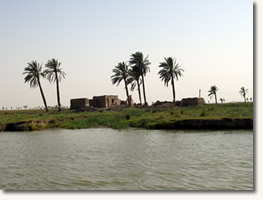
Euphrates River
~~~~~~~~
Why isn't Saddam Hussein on trial for this? For what Hussein did in diverting water from those who needed it simply to punish them politically was clearly a human rights abuse. However, we never hear of this from the "occupying force" there. Why not?
Iraq Marshes' Recovery In Doubt
The long-term recovery of the Iraq marshlands is in doubt because of uncertainties over water supplies to the wetlands, research suggests.
The first study to look at the marshes' recovery warned that increased water demand from farmers and cities could lead to only a portion being restored. Large areas were drained in the 1990s to punish the Marsh Arabs for rebelling against former leader Saddam Hussein.
The findings will be presented next week to the British Ecological Society. Curtis Richardson, from Duke University, North Carolina, US, who led the research, warned that the recent faster-than-expected pace of recovery was unlikely to continue in the long term.
"Our recent field studies have found a remarkable rate of native species re-establishment - of macroinvertebrates, macrophytes, fish and birds in re-flooded marshes. "But the future availability of water for restoration is in question because of increasing urban and agricultural demands for water in Iraq, as well as in Turkey, Syria and Iran, suggesting only a portion of the former marshes can be restored, " Professor Richardson observed.
End of Eden?
The Iraq marshes, sometimes identified as the site of the Garden of Eden, once covered an area twice the size of the Florida Everglades and were famous for their biodiversity and cultural heritage.
Saddam's dams diverted waters away from the marshes
A study in the 1970s said the marshlands were home to more than 80 species of birds, including about 90% of the world's population of the Basra reed warbler (Acrocephalus griseldis).The wetlands also served as important fish spawning and nursery grounds, as well as acting as a natural filter for waste and other pollutants.
Tens of thousands of Marsh Arabs who lived in the area depended on the habitat for fishing and as grazing sites for their buffalo herds. The marshes were devastated in the 1990s after Saddam Hussein's regime diverted water away from the region. This reduced the marshlands, the Middle East's largest wetlands, to just 7% of their original size of 15,000 sq km.
End of excerpt.
Some history:
The Iraqi Government Assault On The Marsh Arabs/Human Rights Watch
~~~~~~~~~~~
Eden Again
An organization working to restore the Mesopotamian Marshlands.
Most of the Iraq water resources originate from outside Iraq where 88 percent of the natural runoff of the Euphrates comes from Turkey, 9 percent from Syria and the remainder from Iraq. As for the Tigris, 56 percent of its natural runoff comes from Turkey, 12 percent from Iran (especially for the two tributaries, lower Zab and Diyala rivers), while source of the remaining water is from within Iraq.
Information: Iraq Marshlands Restoration
The total length of the Tigris river is about 1900 kilometers, of which 1415 are located inside Iraq. The average annual runoff, recorded for many years at the Turkish borders, is about 16.8 billion cubic meters (BCM). Other tributaries flow into the Tigris inside Iraq’s territory, of which Khabor, Upper Zab, Lower Zab, Adhaim and Diyala are the most important. The average inflow of the Tigris River, both from inside and outside Iraq, is around 44 BCM.
Euphrates River
The total length of the river is 2940 kilometers, of which 1160 are situated inside Iraq. The average annual runoff of the river at the Turkish-Syrian border, before the building of the dams for irrigation projects in Turkey, was 30.4 BCM. The river has no tributaries inside Iraq.
Both the Tigris and Euphrates rivers are controlled by a series of dams and barrages. They were built to control the flood season where the inflow water exceeds the need for water in the country and to maintain reasonable water storage for summer when the requirements may exceed the inflow within the river and their tributaries. The annual distribution of the inflow of water resources in Iraq is as follows:
• February - June 7 percent
• July - October 10 percent
• November - January 15 percent
The two rivers and their tributaries are controlled by 25 dams and dikes in addition to 275 irrigation-pumping stations. Water released from the dams is justified mainly by the total requirements down stream. However, some water releases are adjusted according to the needs of hydropower generation.
~~~~
Ok, now that you know from whence the water comes, think about this.
Bechtel Corporation: Blood For Water/By Dr. Vandana Shiva
Why again if Iraq is a "Democratic" country receiving so much "aid" can the people of Iraq not have sovereignty over restoring this natural wonder, and why is water then so scarce for the people in this region? Why is US AID now involved in this "altruistic" effort all of a sudden pledging so much for it's restoration when people in Iraq still don't have electricity, and after we all sat watching this environmental disaster unfold without doing anything about it? Well, it is the same reason why countries like Iraq in the Middle East will continue to be targets in the 21st Century as was mentioned above:
The War For Iraq's Water
One of the many claims of barbarism on the part of Saddam Hussein and his Ba'athist regime is displacing hundreds of thousands of Madan, or Marsh Arabs, and draining the legendary swamps where millennia-old culture had been practiced and preserved. In post-war Iraq, the United States has assumed the responsibility of restoring these marshlands. The United States Agency for International Development (USAID) has been a vocal proponent of bringing water to the arid landscape, addressing the humanitarian needs of the remaining Marsh Arabs, and fixing the ecological crisis which, according to the UNEP, has vanished about 90% of the 20,000 square kilometers of Iraq's marshlands.9
While addressing the marshland concerns attempts to smooth over twelve-year-old political rifts between the American administrators now governing Iraq and the displaced Madan people, it seems somewhat odd that such a relatively isolated minority of the Iraqi population would receive such attention and consideration so immediately after the war, especially since the Madan are Shi'a, a population that has largely rejected the occupying American forces and has rejoiced at the return of Islamic leaders from exile to Iraq.
And yet, American interests are moving forward swiftly.
Bechtel, an American firm with a controversial history of water privatization, who won the largest contract from USAID to rebuild Iraq's infrastructure, is set to be a major player in the process with a contract worth $680 million. Bechtel's history speaks for itself.
Blue Gold, a book exposing global control of water by private corporations, listed Bechtel in the second tier of ten powerful companies who profit from water privatization.10 According to Corpwatch, two years ago current USAID administrator Andrew Natsios was working for Bechtel as the chairman of the Massachusetts Turnpike Authority, a massive transportation project in Boston whose cost has inflated exponentially in the billions of dollars.11 While providing political disclaimers on its website as a result of investigative reporting centering on the close relationship between government and private business, Bechtel certainly will benefit from its positioning as the sole contractor for municipal water and sanitation services as well as irrigation systems in Iraq.
Vandana Shiva also implicates Bechtel in attempting to control not only the process of rebuilding Iraq's infrastructure, but also control over the Tigris and Euphrates rivers themselves.12 Bechtel has been embroiled in a lawsuit with Bolivia for their plan to privatize the water there, which would drastically rise the cost of clean water for the poorest people in the country. To control the water in the Middle East, Bechtel and its fiscal sponsors, the United States government, would have to pursue both Syria and Turkey, either militarily or diplomatically. Syria has already felt pressure from the United States over issues of harboring Iraqi exiles on the U.S.'s "most wanted" list, as well as over issues of terrorism and weapons of mass destruction.
It is not stretch of the imagination that a company like Bechtel with a history of privatization would have its sights set on water in the Middle East, starting with their lucrative deal in Iraq. However, the United States is not positioned to enter a new phase of global geopolitics where water, a limited vital resource that every human needs, is the hottest commodity and where American corporations like Bechtel have not already capitalized on the opportunity to obtain exclusive vending rights.
Devoting attention to restoring the marshes clearly serves U.S. businesses and corporations who have control over which areas of the marshes get restored, and which ones get tapped for their rich oil resources. Control of the marshlands by the U.S.-led interim government and by the American corporations who have won reconstruction contracts is crucial in deciding where new oil speculation will take place. If only a percentage -- 25% according to experts on a Brookings Institution panel on marshland reconstruction -- can be restored, then it would behoove those working on issues of oil and water not to rehydrate areas where such oil speculation will likely take place.
Water is vital to the production of oil as well; one barrel of water is required to produce one barrel of oil. Bechtel and Halliburton, who received a U.S. Army contract to rebuild the damaged oil industry which will likely reach $600 million, are the two most strategically-positioned corporations to control both the water and oil industries in Iraq.
Yet this ruse of generous reconstruction and concern seems both an unlikely and peculiar response after a less-than-philanthropic U.S.-led invasion of the sovereign nation of Iraq. Supporters and opponents of the war alike could hardly miss its transparency. Whether the reasoning was because of oil, liberating the Iraqi people, ferreting out weapons of mass destruction or exerting regional influence, few pretenses were made to distance the war profiteers from the battlefield in the war's wake.
The actions of agencies like USAID, which has pledged more than a billion dollars to facilitate rebuilding infrastructure in Iraq which the U.S. military and policymakers had a large hand in destroying, are far from altruistic. The problem of the Marsh Arabs was not invented overnight at the end of the recent war, but rather has developed in plain view of the whole world via satellite images and documented in-country reports of displacement and abuse. Moreover, the marshlands are not Iraq's sole antiquity. Museums, regions and sites of archaeological importance were destroyed, bombed and looted not only during this last war, but also continuously since the first Gulf War. Will we be paying to rebuild those as well?
According to Peter Galbraith, a professor at the Naval War College, three weeks of ransacking post-war Baghdad left nearly every ministry in shambles, including the Irrigation Ministry, except for the Oil Ministry that was guarded by U.S. troops.13 The people of Iraq are becoming rapidly disenchanted with a prolonged U.S. presence in their country as their former disempowerment under Saddam is translated into present disempowerment under the Americans.
According to those working closely with the project to rehydrate the marshlands, in the newly "liberated" Iraq the silenced voices of the oppressed peoples can now be heard and addressed, the stories of destruction can be told and the much-needed healing of humans and terrain can take place. Whether this will actually happen is another story. At the Brookings Institution forum on the marshlands, no native Iraqis were represented, and the larger question arising in the post-war reconstruction of Iraq is what tangible legitimacy is given to voicing the will of the people by putting representative Iraqis in power.
End of excerpt.
~~~~~~~~~~~
They didn't go into Iraq just for the oil.... They went there to control the resource that is ultimately the most precious to the people there. Saddam Hussein may have drained the marshes in a blatant human rights abuse, but we are no better in our treatment of the resources in Iraq and the Middle East. The motivation is still the same, POLITICAL AND ECONOMIC CONTROL, and it is a disgrace.
It's blood for water, blood for corruption, blood to keep the military/industrial complex humming. And instead of working to bring control of resources back to the people of Iraq with the sincere motivation of restoring all we destroyed, it is being privatized for profit. Seems Hussein and this government work very well together.

Shaking Hands: Iraqi President Saddam Hussein greets Donald Rumsfeld, then special envoy of President Ronald Reagan, in Baghdad on December 20, 1983.
Shaking Hands with Saddam Hussein:
The U.S. Tilts toward Iraq, 1980-1984
~~~~~~~~~~~~~~~~~~~~~~~~~~~~~~~~~~~~~~~~
General Reference on the growing water crisis in the Middle East:
Water In The Middle East
Subscribe to:
Posts (Atom)