Wednesday, January 31, 2007

Millions To Go Hungry, Waterless


I am going to expound on this later, and also include some news regarding the drastic measures Australia will now take to give people drinking water. The one thing I did want to type in response to this report now however, is to the U.S Congress: STAND UP FOR THE PEOPLE OF YOUR COUNTRY AND THIS PLANET AND STOP THIS GD WAR IN IRAQ/IRAN/AFGHANISTAN AND WHEREVER ELSE, AND START WORRYING ABOUT THE FUTURE. More later. Also, sorry for the lack of posts this past week. My schedule has been busy but I have not forgotten about this crisis, because it is always part of me.
~~~~~~~

Millions To Go Hungry, Waterless


Published on Tuesday, January 30, 2007 by Reuters
Millions to Go Hungry, Waterless: Climate Report
by Rob Taylor

Rising temperatures will leave millions more people hungry by 2080 and cause critical water shortages in China and Australia, as well as parts of Europe and the United States, according to a new global climate report.

By the end of the century, climate change will bring water scarcity to between 1.1 and 3.2 billion people as temperatures rise by 2 to 3 Celsius (3.6 to 4.8 Fahrenheit), a leaked draft of an Intergovernmental Panel on Climate Change (IPCC) report said.

Rising temperatures will leave millions more people hungry by 2080 and cause critical water shortages in China and Australia, as well as parts of Europe and the United States, according to a new global climate report. The report, due for release in April but detailed in The Age newspaper, said an additional 200 million to 600 million people across the world would face food shortages in another 70 years, while coastal flooding would hit another 7 million homes.

"The message is that every region of the earth will have exposure," Dr Graeme Pearman, who helped draft the report, told Reuters on Tuesday. "If you look at China, like Australia they will lose significant rainfall in their agricultural areas," said Pearman, the former climate director of Australia's top science body, the Commonwealth Scientific and Industrial Research Organization.

Africa and poor countries such as Bangladesh would be most affected because they were least able to cope with greater coastal damage and drought, said Pearman. The IPCC was set up in 1988 by the World Meteorological Organization and the U.N. Environment Program to guide policy makers globally on the impact of climate change. The panel is to release a report on Friday in Paris forecasting global temperatures rising by 2 to 4.5 Celsius (3.6 to 8.1 Fahrenheit) above pre-industrial levels by 2100, with a "best estimate" of a 3C (5.4 F) rise.

That report will summarize the scientific basis of climate change, while the April draft details the consequences of global warming and options for adapting to them. The draft contains an entire chapter on Australia -- which is in the grip of its worst recorded drought -- warning the country's Great Barrier Reef would become "functionally extinct" because of coral bleaching. As well, snow would disappear from Australia's southeast alps, while water inflows to the Murray-Darling river basin, the country's main agricultural region, would fall by 10 and 25 percent by 2050.

In Europe, glaciers would disappear from the central Alps, while some Pacific island nations would be hit hard by rising sea levels and more frequent tropical storms. "It's really a story of trying to assess in your own region what your exposure will be, and making sure you have ways to deal with it," said Pearman. On the positive side, Pearman said there was an enormous amount the international community could do to avert climate change if swift action was taken.

"The projections in the report that comes out this week are based on the assumption that we are slow to respond and that things continue more-or-less as they have in the past." Some scientists say Australia -- the world's driest inhabited continent -- is suffering from "accelerated climate change" compared to other nations.
© Reuters 2007
~~~~~~~~~
This is PM Howard's answer to it all: handing the river system over to the Federal government on a silver platter. It is the government's great opportunity to now hijack the water system and keep the people paying through the nose for any water they get to drink (which according to news will be "reclaimed" water.) Not good. How long before the entire water system in Australia is privatized with substandard quality? As usual, it is all about profit.

What Howard should have done is institute regulations regarding water flow and seek to implement legislation regarding the climate crisis. However, he isn't doing that. He appears to be now using this as an opportunity to give him political clout for the next election after allowing it to get to this point, and to make a profit for the government off of the misery of its people.

The drought is not now going to instantly disappear because he has decided to take it upon himself to conviscate the water which should be a public trust. He is no savior, he is actually one of the causes now looking to save face in an election year. Climate change is here to stay and so are it affects unless people begin to change their ways as well and until governments really see the urgency of the climate crisis and institute legislation across the board to mitigate all of its causes, including the use of fossil fuels.

Surely there is no doubt that irrigation methods and water management need an overhaul, but that won't come by the federal government taking it over, and I fear it will come at a very hefty price for Australians.
~~~~~
Australia unveils multi-billion dollar bid to beat water shortage
Thu Jan 25, 12:11 AM ET

CANBERRA (AFP) - Australian Prime Minister John Howard has unveiled a radical 10-billion dollar (7.8-billion US) plan aimed at protecting dwindling water supplies in the world's driest inhabited continent.

Faced with the worst drought in a century and the growing threat of climate change, Howard used his annual address on the eve of the Australia Day holiday to outline a 10-point intiative to better manage the island's lifeblood.
A key element involves a controversial federal government takeover of the country's biggest river system, the Murray-Darling Basin, from the four states currently controlling it.

Howard said that last year the inflow of water into the system had fallen to 40 percent of its previous all-time lowest level, and that he would write to the states to ask them to hand over control.

More at the link.

Friday, January 19, 2007

Climate Change Affecting Washington State/Glaciers Worldwide

North Cascade Glaciers

You MUST look at these pictures.
~~~~~~~~~~~~~~~~~~~~~~~~~~~~~~~~~~~

Wednesday, January 10, 2007 · Last updated 6:01 p.m. PT

New study says climate change already affecting Washington

By GENE JOHNSON
ASSOCIATED PRESS WRITER

SEATTLE -- From more devastating wildfires to decreased snow in the mountains, climate change is already affecting Washington's economy, a new report says.

And as temperatures continue to increase, the changes will only become more dramatic: Low-lying areas such as the Skagit River delta will flood as sea levels rise, more people will get asthma as pollution worsens and the state's dairy cows will produce less milk in hotter weather, to cite a few of the report's warnings.

The report was commissioned by the state departments of Ecology and Community Trade and Economic Development, and was researched and written by Climate Leadership Initiative at the University of Oregon, with guidance from Washington economists and scientists.

There are too many variables involved to put a price tag on the impact climate change is already having or will have in the future, the report said.

"Absent focused efforts to reduce greenhouse gas emissions and to prepare, to the extent possible, for the environmental and economic changes that cannot be avoided, damage to our Northwest economy will only increase," Ecology Director Jay Manning said in a news release.

The 119-page report weighs the effects of warmer temperatures on various sectors of the economy, based on predictions that the region's climate will warm half-a-degree per decade over the next several decades, and poses questions for policymakers to consider.

Among the gravest concerns are effects that retreating snowpack in the mountains will have on hydropower generation, drinking water supplies, irrigation for crops and stream flows for salmon. As many as 75 percent of glaciers in the North Cascades could vanish in this century if those warming predictions prove true, the report said.

Climate Change Affecting Washington State
~~~~~~~~~~~~~~~~~~~~~~~~~~~~~~~~~~~~~~~~
Glaciers are melting all over the world from the Himalayas, to the Alps, to South America, to Africa, New Zealand, Greenland, the Arctic, and also right here in the United States. And they are melting at a faster rate than scientists had previously predicted because the real affects of human induced climate change combined with other weather phenomenon are much more extreme than anticipated as well.

The signs are there regarding what human behavior regarding burning fossil fuels to wasteful management of resources is doing to our planet and our resources, chief among them water. It is time for people to see these signs, understand them truthfully, and prepare for what we have put into motion as well by doing everything possible to preserve what we have left. We threaten our future existence the longer we continue to drag our feet.

Many people do not realize how important an indicator melting glaciers are regarding climate change. With every inch that melts, it is less snow pack to fill rivers and streams that provide water for living. With every inch that melts, a bit of climate history goes with it.

Glaciers Melting Worldwide, Study Finds

I do not believe we can now stop these glaciers from melting, but we can hopefully slow it down and begin to help mitigating even more catastrophic affects of the climate crisis that will threaten the world water supply even more severely in years to come. Conservation is key. Facing the crisis of overpopulation is key in regards to providing people in underdeveloped and developing countries with information on family planning and birth control. Looking into alternate energies (not corn ethanol) for underdeveloped countries and developing countries that do not waste water (as in solar power.) And most importantly, educating people about irrigation methods (such as subsurface drip irrigation) that do not waste water!

This for sure is a crisis that has already begun. However, the most devastating effects of it can be mitigated if we only see the URGENCY of acting NOW. How long will we wait? Until the Snows of Kilamanjaro are gone? Until there are no more Alps? No more Himalayas? The repercussions of such a thing are simply too catastrophic to contemplate.

Also see my other entries on this topic with more to come:

The Glaciers of South America: Cities In Peril Of Losing Water

Tibet's Lofty Glaciers Melting Away

Water At Risk For Millions Due To Melting Glaciers

Tuesday, January 16, 2007

Lake Chad Is Dying

THIS IS A SIN.

This lake provides water to more than 20 million people living in the four countries which surround it, Chad, Cameroon, Niger, and Nigeria. What are the people to do when the water is gone?


Lake Chad Fishermen Pack Up Their Nets


Muhammadu Bello and his nine children used to depend on Lake Chad for their livelihoods.

But the former fisherman became a farmer as the waters vanished eastwards from the shores of his village in north-east Nigeria.

Experts are warning that the lake, which was once Africa's third largest inland water body, could shrink to a mere pond in two decades.

A recent study by Nasa and the German Aerospace Centre blames global warming and human activity for Africa's disappearing water.

Cheating

"Africa is being cheated again by the industrialised West," says Jacob Nyanganji of Nigeria's University of Maiduguri.

This lake is dying and we are all dying with it
Muhammadu Bello

"Africa does not produce any significant amount of greenhouse gases, but it's our lakes and rivers that are drying up. America has refused to ratify Kyoto and it is our lakes that are drying up."

Villagers in Nigeria's semi-arid border region with Chad, Niger and Cameroon understand full well the consequences of what is happening.

"I don't know what global warming is, but what I do know is that this lake is dying and we are all dying with it," says Mr Bello.

"Some 27 years ago when I started fishing on the lake, we used to catch fish as large as a man.

"But now this is all the fishermen bring in after a whole night of fishing," he says pointing at tiny catfish piled on the ground in Doron Baga's once-famous fish market.

His family now farm on rich, dark loamy soil that was once part of the lake - growing onions, peppers, tomatoes and maize.


There are constant arguments over territory between fishermen

Fisherman Muhammad Sanusi

"This entire area used to be covered with water when I first came here," Mr Bello says with a sweep of his hand as we left the village by car heading towards the lake - a journey which took three hours along a bumpy dusty trail.

As recently as 1966, Lake Chad, which sits between Nigeria, Chad, Cameroon and Niger, was a huge expanse of water that the locals fondly referred to as an "ocean".

The Central African Republic's Logone and Chari rivers empty into the lake. But reduced rainfall and damming of the rivers means that only half of the water now gets to the lake.

The Komadougou-Yobe River in far north-eastern Nigeria which also feeds the lake now flows only during the rainy season.
~~~~~~~~~~~~~~~~~~
The people of Africa are suffering because of the gluttony of the West in regards to our seeming indifference in understanding how our actions here affect people around the world. It is immoral for us to simply watch their lakes drying up, their land turning to desert, their cattle lying emaciated, their fish dwindling, and their lives and livelihoods lost. As this article also illustrates, the people of Africa on a wide scale do not even know what "global warming" is. All they know is that on a lake that was once thriving now stands a creeping desert with dwindling hope of life.

I am then making an urgent plea to Al Gore to take his Climate Project to Africa. I know he has already done a training session in Australia and is planning one in Britain for this March. I believe it is also imperative that he think about expanding this program to Africa to not only train individuals to spread this truth about the climate crisis, but to also work with those governments and NGOs willing to provide tools to educate on this topic and to also address overpopulation, waste of freshwater resources, and desertification. I would gladly donate what I could to such a cause.

Mr. Gore has stated that we have all we need to solve this problem, and that is not only true of the climate crisis but the water crisis as well. However, due to ignorance, greed, and now this climate crisis, fresh water is and will become a golden commodity to be used as a political/corporate weapon and a way to keep people subservient. Water is a human right, and it is inhumane and immoral for those of us who live in a land of such fortune and plenty to sit and watch while fellow world citizens die from a catastrophe that can be remedied by us pulling together as global community.

The Disappearance Of Lake Chad

If this were the Great Lakes, would you not think this urgent?

Saturday, January 13, 2007

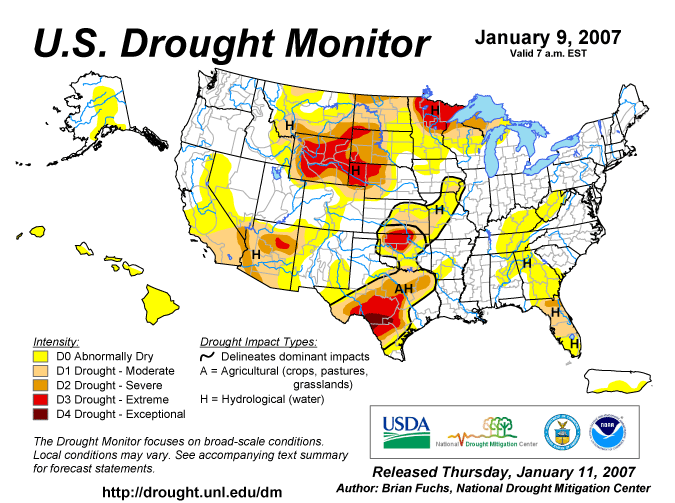
Monitoring Drought In The U.S.


U.S. Drought Monitor

Other Drought Monitoring Tools

National Drought Mitigation Center

Sorry for the lack of entries in the last week. I have been busy with work and other business, but I have not forgotten about the environmental plight of our world currently especially regarding the affects of drought and water scarcity.

Starting next week for as much time as I can put aside, I will try to post information about drought around the world, it's causes, and information that people can access regarding drought conditions.

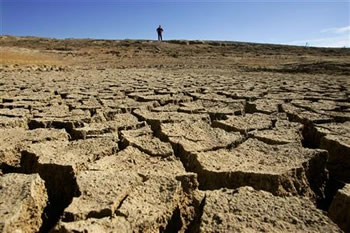
Drought is an insidious condition that leads to water shortages and famine and kills millions of people. It is something we must now focus more attention to also in relation to higher temperatures and glacier melt that are taking necessary fresh water resources away from billions of people around the world.

I started this by posting a drought map of the United States to show those who think that drought is only a problem faced on the other side of the world that we are not impervious to its affects. As the current severe and devastating droughts in Australia and Africa illustrate, this is a condition we can no longer ignore.

Saturday, January 6, 2007

Drought Threat Casts Shadow On Agriculture

The one thing you can see from reading all of these entries, is that it doesn't matter in what part of the world you live in, people are the same when it comes to wasting natural resources. Countries are going to have to begin practicing more responsible water conservation if they are to survive. I do not believe this is just a fluke. This will be our way of life now, as we have allowed our greed and our dismissal of this problem to now escalate to a global crisis.


Drought Threat Casts Shadow On Agriculture

(04-01-2007)
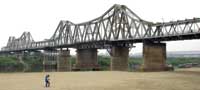
The water level of the Hong (Red River) has reduced to such an extent that local people can walk across the river bed. — VNA/VNS Photo Doan Tung

HA NOI — Relevant sectors and localities nationwide have begun implementing measures to fight droughts, forecast to occur on a large scale this year.

Nguyen Dinh Ninh, Deputy Director of the Water Resource Department, said El Nino would affect the whole country, but the southern-central area, Tay Nguyen (Central Highlands) and southern regions would be the worst hit with droughts predicted to get more serious than last year.

Water flow in the northern rivers was expected to come down by 15-50 per cent from the average rate, and in the lower part of Red River by as much as 30-50 per cent due to diverting water to the two major hydro-power plants of Hoa Binh and Thac Ba.

While rains, expected around this time in the central-southern area and western Truong Son mountain, have kept away, the drought could stretch to August if it doesn’t rain till April.
With the dry season having started last month, and expected to continue till May, 2007, water in the rivers in central, Tay Nguyen (Central Highlands) and southern regions was expected to come down by 20-40 per cent, increasing drought and salinity.

The many factors causing droughts include the increasing demand for water, shorter rainy season and longer dry season, and shortage of water for irrigation.

With about 200,000ha of winter-spring rice crop in the northern area facing water shortage, the Ministry of Agriculture and Rural Development has urged localities to check the volume of available water, and asked them to carry out rice transplant only in areas having enough water.
Localities have also been urged to closely manage water resources, prevent loss of water, especially in reservoirs, monitor salinity and store water from tides for the winter-spring rice crop.
~~~~~~~~
More at the link.

Also see:

Severe Drought Persists Throughout Vietnam

Southeast Asia Drought/Maps


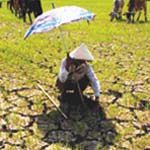
A farmer in Pleiku City examines her drought-plagued rice field.— VNA/VNS Photo Sy Huynh


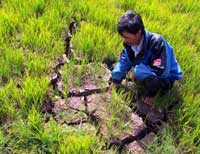
Tens of hectares of rice in Ia Bang Commune in Gia Lai Province �s Dak Doa District have been damaged by severe drought. � VNA/VNS Photo Sy Huynh

Monday, January 1, 2007

A Century Later, Los Angeles Atones For Water Sins

Collusion and deception have been common practice regarding water resources for centuries. Hopefully, this will atone for the damage caused to Owens Valley.


A Century Later, Los Angeles Atones For Water Sins

By RANDAL C. ARCHIBOLD
Published: January 1, 2007

INDEPENDENCE, Calif. — It may fall short of a feel-good sequel to “Chinatown,” the movie based on the notorious, somewhat shady water grab by Los Angeles that allowed the city to bloom from a semi-arid desert.
Skip to next paragraph


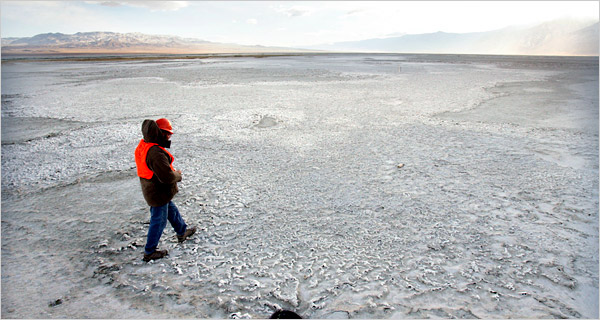
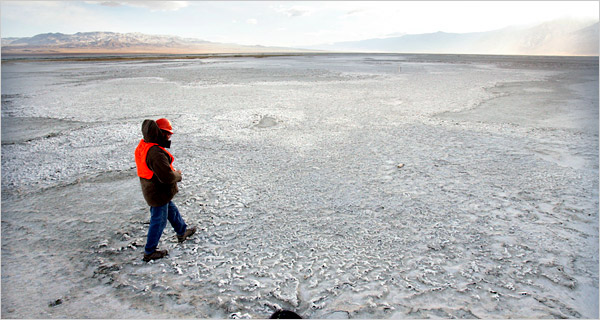
Mike Prather, an environmental advocate, walked a dry part of Owens Lake, which emptied when the Owens River was diverted to Los Angeles.
J. Emilio Flores for The New York Times


As part of a project to restore water to the Owens Valley, a dam redirects water going to Los Angeles, causing it to flow into the Owens River.

But in one of the largest river restoration efforts in the West, water is again flowing along a 62-mile stretch of the Owens River after a dry spell of nearly a century.

That part of the river had been left mostly drained when upstream water, fed by snowmelt from the towering Sierra Nevada, was channeled 233 miles south to fill swimming pools and bathtubs throughout Los Angeles.

The restored flow is among several long-awaited steps the city is taking to help make amends for the environmental consequences of its water maneuvering, most notably the drying up of Owens Lake, an area more than three times the size of Manhattan, here in the Owens Valley.
Los Angeles agreed in December to expand efforts to control toxic dust storms that erupt from what is left of the lake, a 110-square-mile body that emptied when the river was diverted to Los Angeles through an aqueduct opened in 1913.

The lake’s salty, mineral-laced basin has been the largest single source of particulate pollution in the country. It looks so otherworldly that it doubled as a desolate planet in the movie “Star Trek V: The Final Frontier.”

To restore the river, Los Angeles built automated gates at the point where the river veers into the aqueduct. The gates steer some water into the original riverbed, setting the stage for the growth of cottonwood trees and other plants and the return of waterfowl and other animals.
Much of the water eventually returns to the aqueduct, though some of it is being used for lake irrigation and other projects.

Environmentalists here say they are keeping an eye on Los Angeles for backsliding, but they acknowledge that the new efforts will make a significant difference.

More at the link.
~~~~~~~~~
More resources:

The Owens Valley Land Grab

Images of Owens Valley
You must look at these images to see the full extent of the damage done to this region.